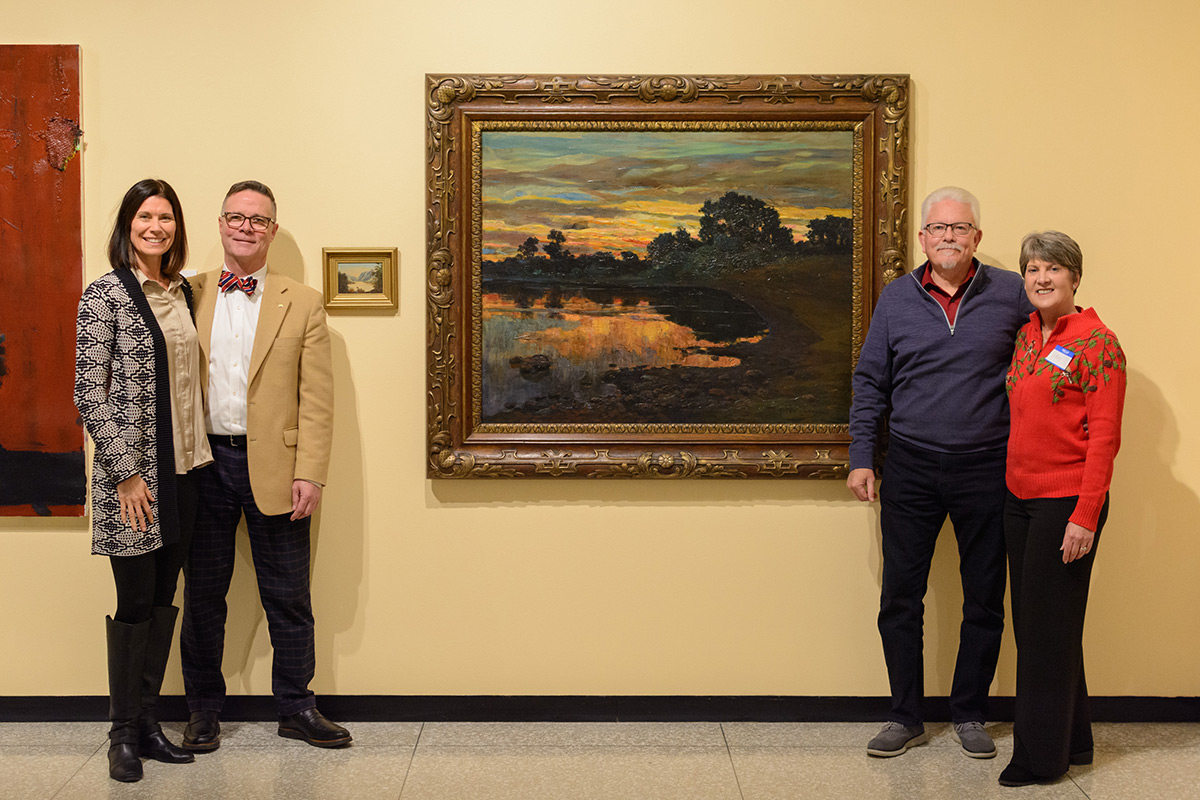
We are thrilled to continue our Adopt a Work of Art program with unique pieces of art from the KIA’s permanent collection. This exclusive opportunity allows you to make an impact by adopting a remarkable work of art, playing a direct role in supporting our permanent collection for future generations. 

As an adopter, you will receive:

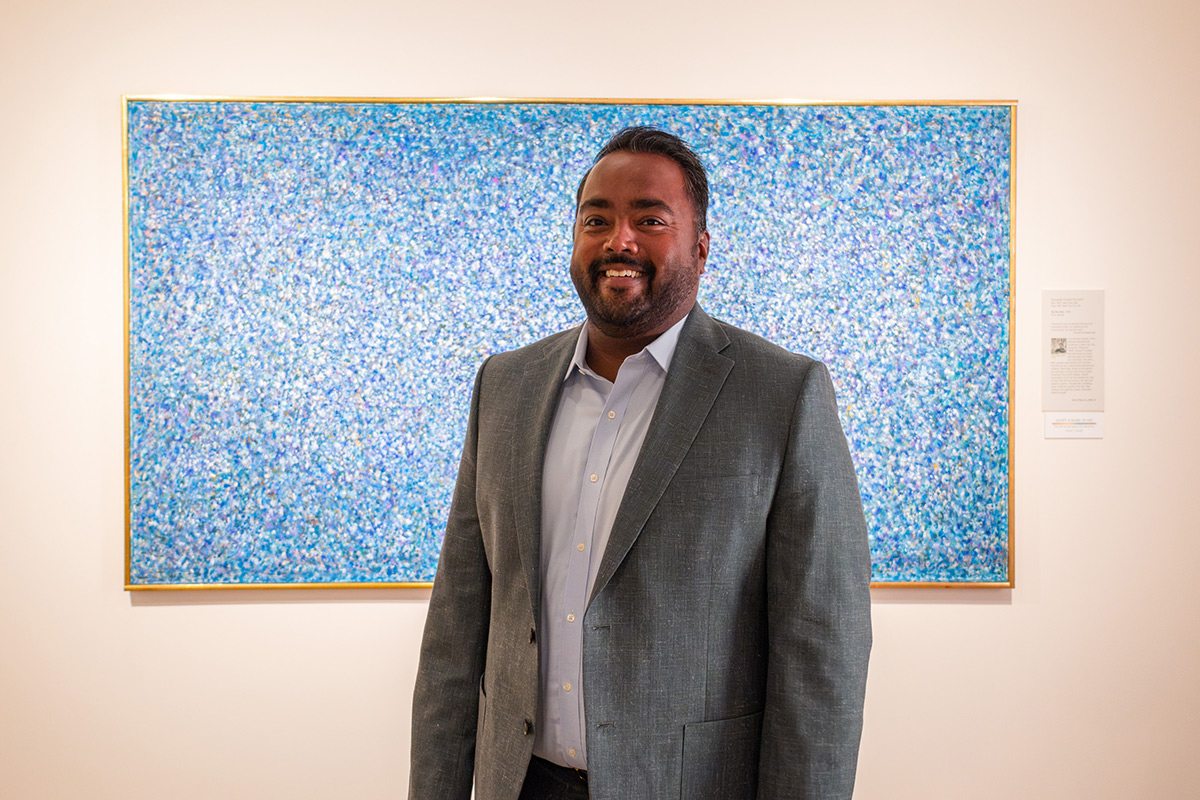
  • Your name proudly displayed on the label of the adopted artwork*
  • A picture of you with the adopted artwork* 
  • Your name on the website, lobby digital monitor, and recognition in Sightlines
  • A special gift to commemorate your selected artwork

For more information, please contact Josiah Solis, Donor & Corporate Relations Manager,

*These benefits are available when the work is on display, which is at the sole discretion of the Curatorial Department

Adopt for $3,500

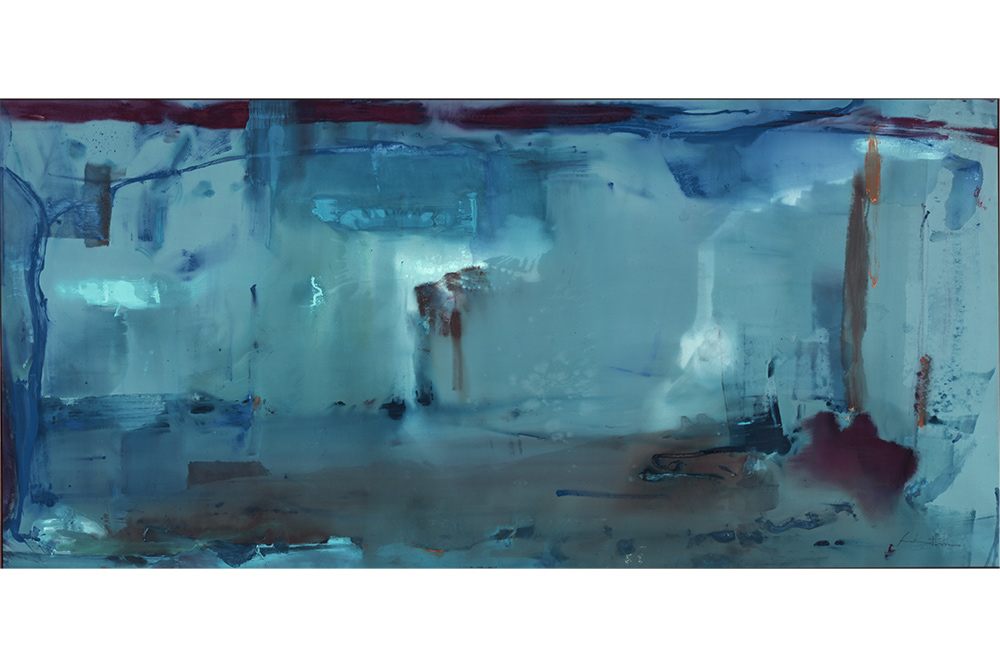
Code Blue

Helen Frankenthaler (1928–2011) was one of the leading artists of the second-generation Abstract Expressionists in New York. This second generation focused more on overall color composition than on the expressive brushstrokes and splatters that interested first-generation artists like Jackson Pollock. In the early 1950s Frankenthaler’s novel soak-staining technique put her at the forefront of the development of Color Field painting (in which color is applied in expressive large areas that might seem to immerse the viewer) and Lyrical Abstraction (which countered minimalism with expressive, loose painting and occasional imagery). Frankenthaler’s use of immense scale and moody hues aims to evoke an emotional experience in the viewer. Code Blue was created on the floor of her studio with large brushes, mops, brooms, and buckets. Frankenthaler challenged traditional painting techniques by using thin washes of paint juxtaposed with clumps of pigment. Her absorbent, unprimed canvases allowed the layers of paint to soak into the painting’s surface. Code Blue’s bluish-green stains provide a murky depth that absorbs and contains. Her dynamic gestures, bold application of color, and spontaneous processes make the paint itself the subject of the work. Frankenthaler’s stains feel weightless, drawing depth into her compositions.
Show more about this piece

Code Blue is on loan with the Gagosian Gallery in New York City from April–September 2026. Adopting this artwork supports the loan and helps a wider audience discover a new favorite.

Helen Frankenthaler, Code Blue, 1980, acrylic on canvas. Collection of the Kalamazoo Institute of Arts; National Endowment for the Arts Matching Museum Grant and donation from anonymous donor, 1979/80.82

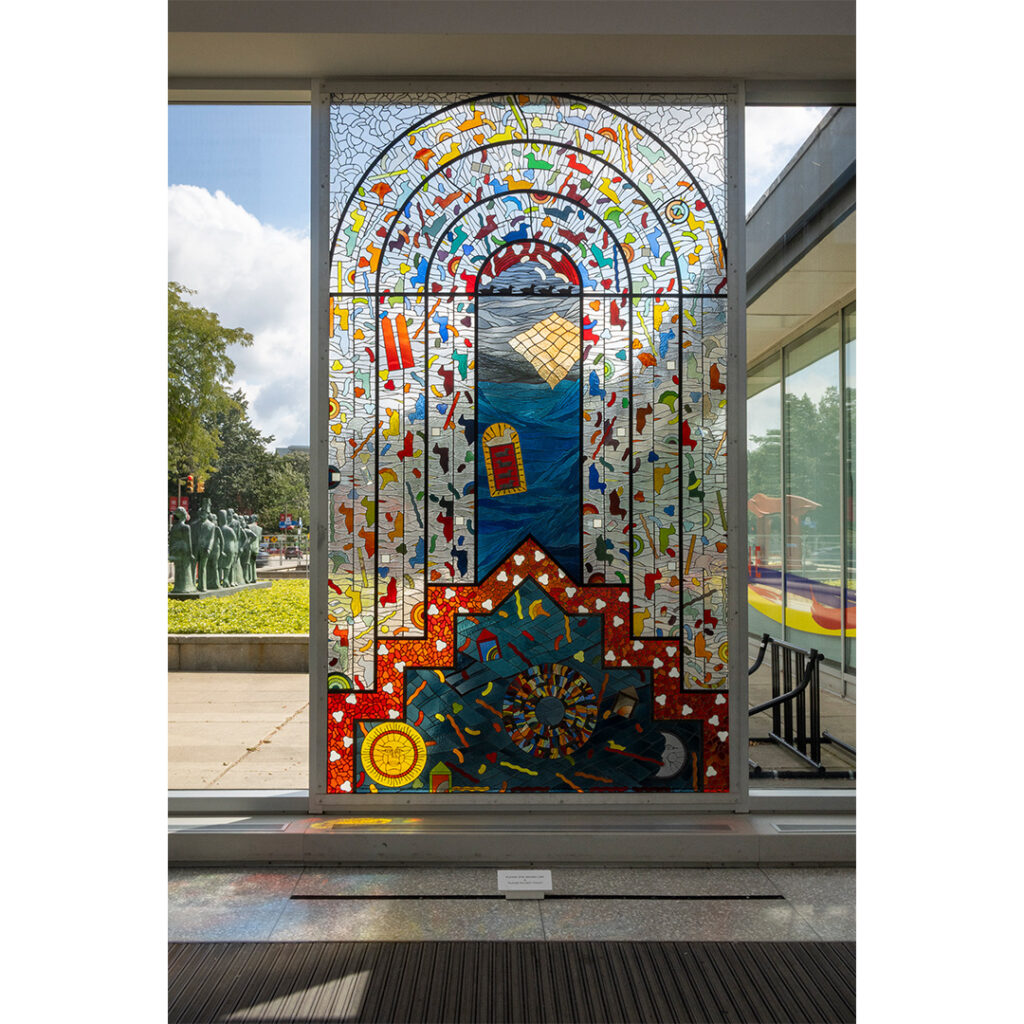
In a Southern Tradition

Description coming soon.
Show more about this piece

Dwayne Lowder, In a Southern Tradition, 1981, stained glass. Collection of the Kalamazoo Institute of Arts; Gift of the artist, 1984/5.3.

Adopt for $1,000

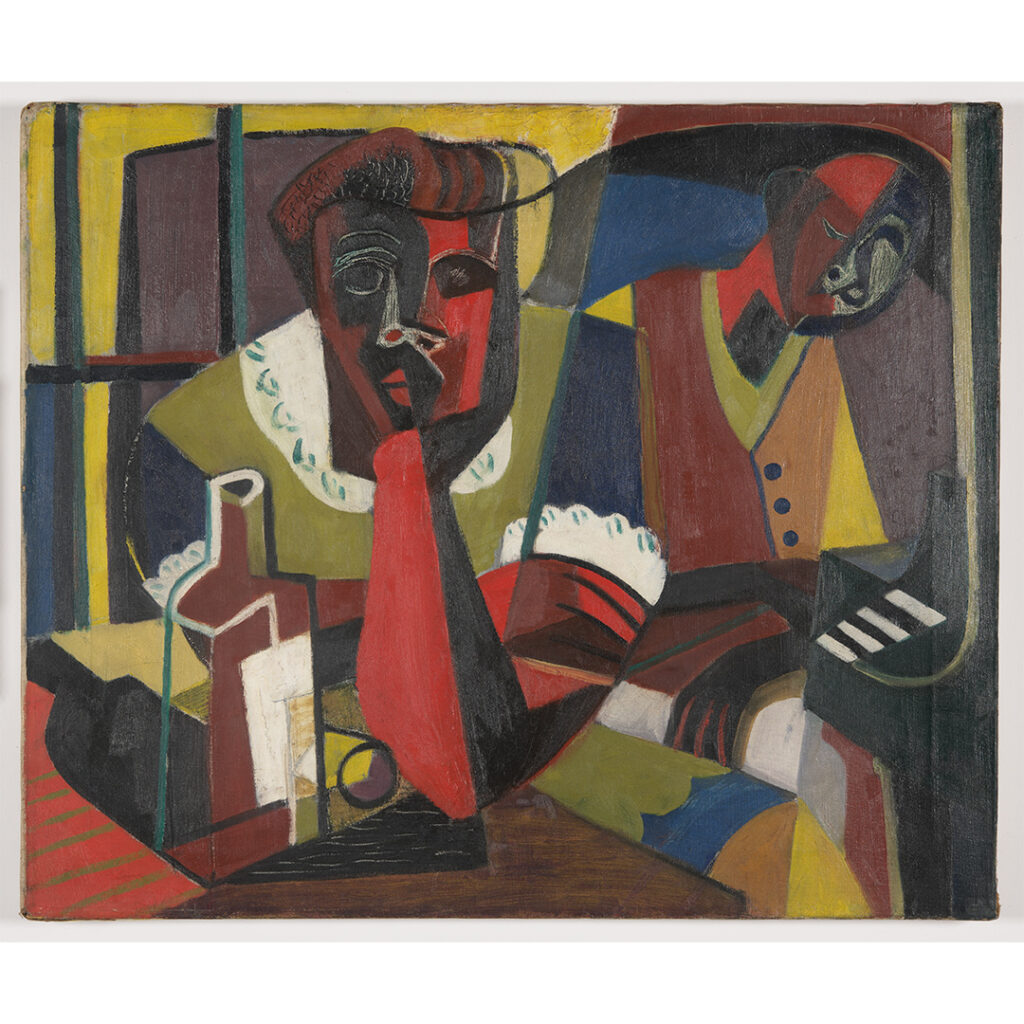
Untitled (Couple)

In Untitled (Couple), a woman sits at a table, wearily resting her head on her arm. Next to her is a bottle and overturned glass. In the background, a man sits quietly at a piano. While the figures appear isolated, lost in their own thoughts, they are connected through the composition’s overlapping planes and the strong directional movement that aligns their arms. The glowing reds that emerge from the subdued pattern of colors add emotional warmth to the reflective mood of the painting. A muralist, painter, and teacher, Charles Alston was an important figure in the Harlem Renaissance and a vital contributor to the development of African American art. Alston arrived in New York City as a young boy from North Carolina. He attended Columbia University where he developed a deep interest in Modern art. At the same time, Alston also drew inspiration from the music and the black cultural life of Harlem. [“American Realism” Exhibition Label, 2023].
Show more about this piece

Charles Henry Alston, Untitled (Couple), ca. 1945-1950, oil on canvas. Collection of the Kalamazoo Institute of Arts; Acquired through the generosity of an anonymous donor, 2010.29

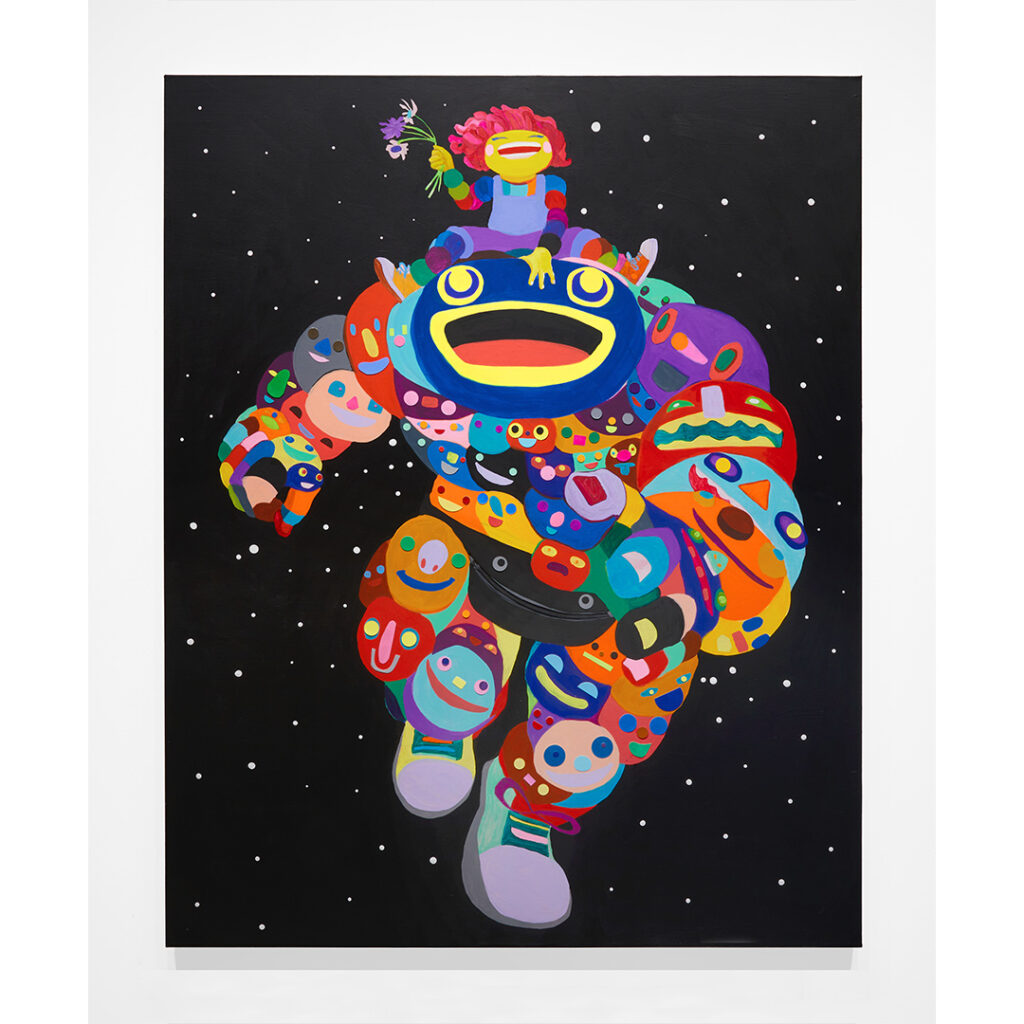
Always Love You

Choi’s Always Love You depicts the joyful reunion of Pound Cake Man and Emma Pound Cake Girl. According to The Cosmic Womb lore, Pound Cake Man was once a brainwashed henchman for the Viridian Crown, tasked with punching and consuming Globbernauts, which then absorbed into his body. After recovering his memory, he remembers his true identity—a single father from planet, Hensoria. Here, we witness the aftermath of his transformation and his long-awaited reunion with his daughter, Emma Pound Cake Girl. Freed from his past, he delights in finding Emma and embraces the love that was always within him. His story of self-discovery and redemption reflects Choi’s personal journey, with the character symbolizing her birth father. His muscular, vibrantly colored form embodies her father’s outgoing and playful spirit. Always Love You explores the courage it takes to break free from harmful behaviors, face one’s past, and forge new paths. It also reflects on the redeeming power of unconditional love. This heartwarming reunion invites viewers to consider the strength it takes to heal, reconnect, and choose love over hate.
Show more about this piece

JooYoung Choi, Always Love You, 2022, acrylic, gouache, and vinyl paint, carbon transfer, and cut paper on canvas. Collection of the Kalamazoo Institute of Arts; Joy Light East Asian Art Acquisition and Exhibition Fund, 2025.1.

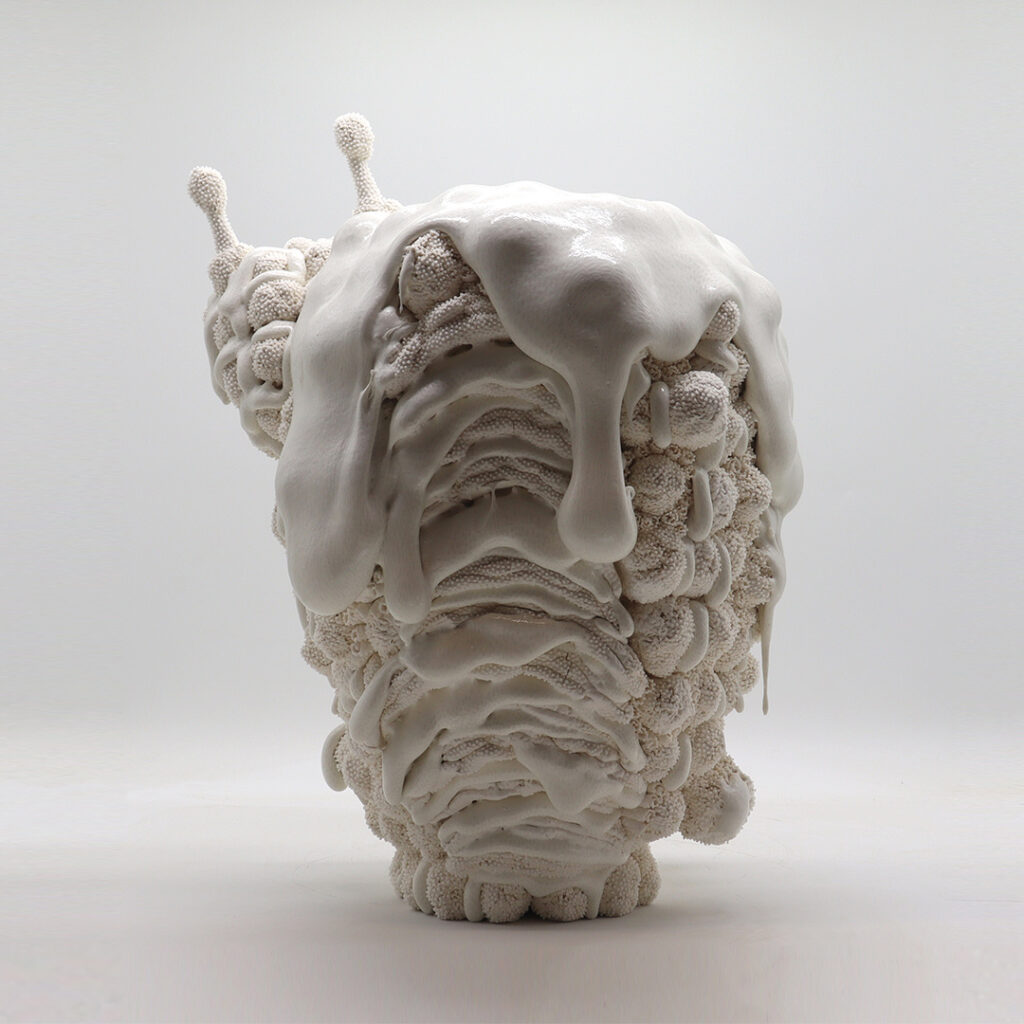
Undercooled

Born in 1984, during a period of economic downturn, Kazuhito Kawai is known as a millennial in the U.S., but in Japan, they are known as the ‘Lost Generation.’ For many adults of Kawai’s age, pop culture has served as a means of escapism and a way to avoid the difficult realities of Japanese adulthood during the economic tumult they would face. The ’90s, a time of prosperity and opportunity, has inspired many of Kawai’s works, which are named after movies, songs, and books from that decade. Undercooled is named after a song by the same title by Japanese composer and musician Ryuichi Sakamoto. About his work Kawai says it contains a “spontaneous, tactile approach with the conceptual foundations.” Kawai’s work is included in the Loewe Collection, the Oketa Collection, and the Takahashi collections, among others.
Show more about this piece

Kazuhito Kawai, Undercooled, 1984, glazed ceramic. Collection of the Kalamazoo Institute of Arts; Joy Light East Asian Art Acquisition and Exhibition Fund, 2024.3.

Turtles Dream Too

Koo Schadler is among the foremost artists today working in egg tempera, a classical painting technique valued for its luminosity and ability to render extreme detail. Schadler constructs her paintings by applying hundreds of layers of translucent pigment, which is augmented here by oil glazes that enhance the richness of the surface and intensity of the colors. Schadler updates this age-old technique by creating imagery rooted in contemporary aesthetics. In Turtles Dream Too, Schadler employs the meticulous technique of egg tempera to create an imaginative work that obscures the ordinary with the fantastical.
Show more about this piece

Koo Schadler, Turtles Dream Too, 1962, egg tempera and oil glazes on panel. Collection of the Kalamazoo Institute of Arts; Permanent Collection Fund, 2005.30.

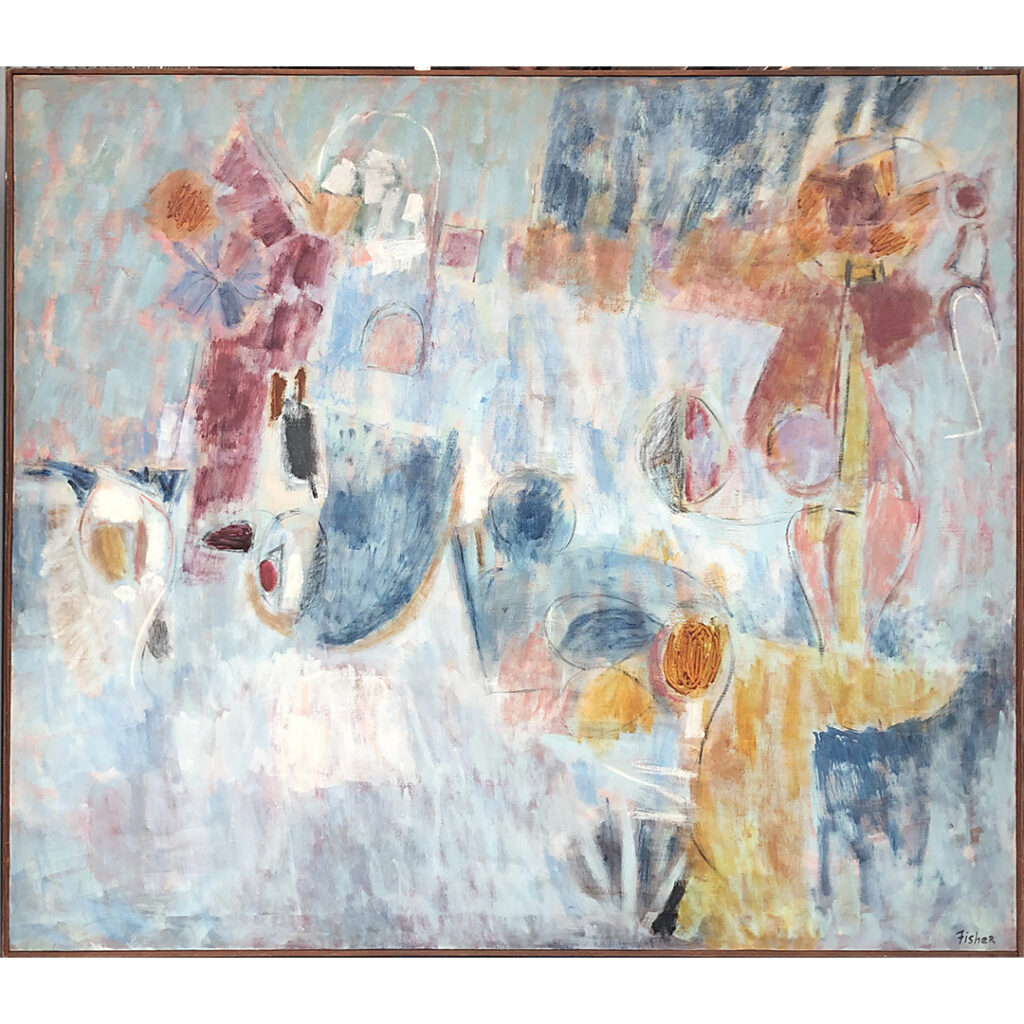
Blue Suspension

The 1950s were a pivotal decade in Ethel Fisher’s career. After studying at the Art Students League in NYC in the late 1940s, Fisher relocated to Miami and began working in a style she called “Abstract Impressionism.” Fisher believed color had psychological power and was “capable of evoking both atmospheric resonance and seductive transcendence.” In Blue Suspension, Ethel Fisher creates a dreamy field from pale blues, whites, pinks, and warm ochres. Her loose brushwork and the layers she creates blur boundaries between figures and landscapes, leaving biomorphic forms across the surface. Despite working outside the physical and aesthetic boundaries of NYC and Abstract Expressionism, Fisher earned shows in Miami, Havana, and New York throughout the 1950s and ‘60s, and her work is now found in collections across the country.
Show more about this piece

Ethel Fisher, Blue Suspension, 1959, oil on linen. Collection of the Kalamazoo Institute of Arts; Gift of Margaret Fisher, 2023.44.

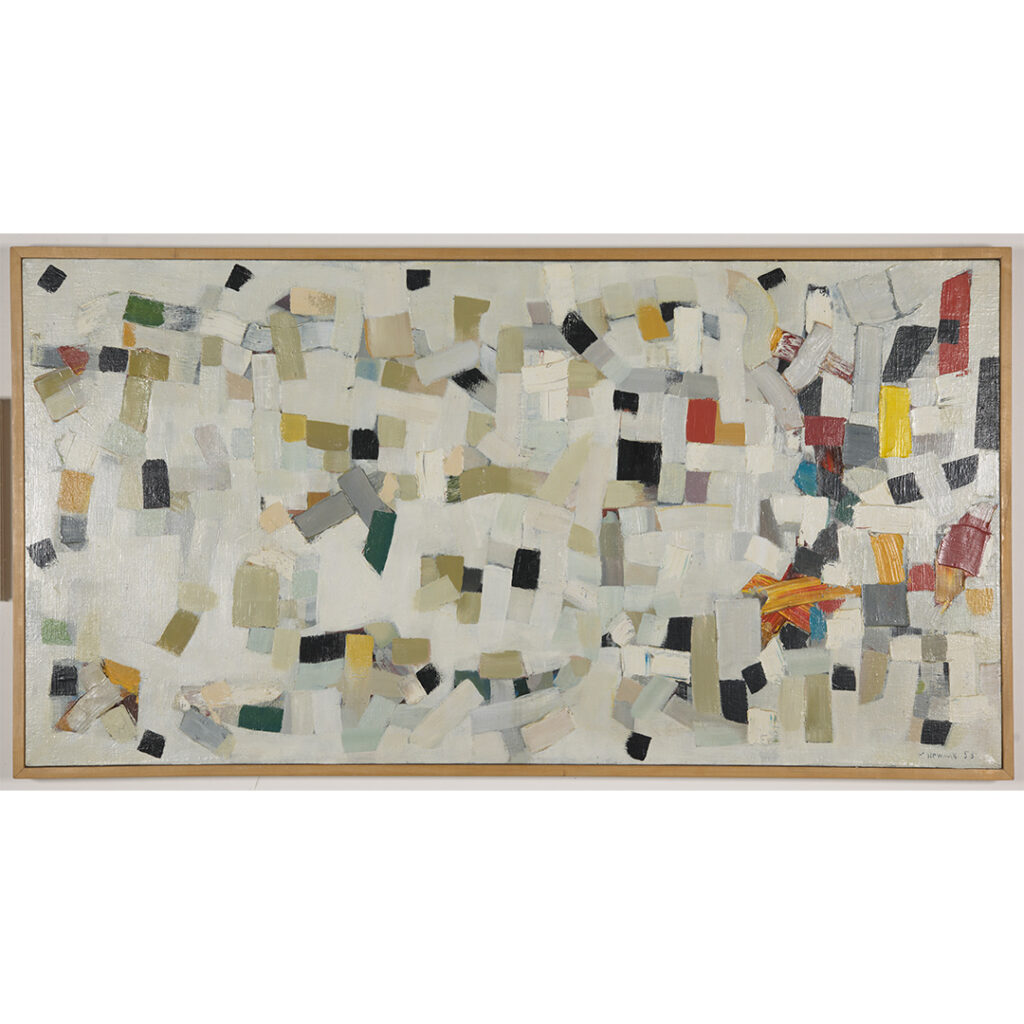
Abstract with Oranges

As an artist and educator, Kirk Newman spent decades developing his own visual language and nurturing the talents of generations of artists. Newman is best known for his prints and sculptures of humorous, stylized figures, but his artistic career began with experimentation in abstraction through painting and sculpture. Abstract with Oranges contains small, solid squares or dashes of color in black, gray, green, red, yellow, and white arranged in seemingly random intervals on a largely white ground.  The brushstrokes, which are roughly uniform in size, alternately overlap and interlock one another, creating an experiment in composition, color, and pattern. 
Show more about this piece

Kirk Newman, Abstract with Oranges, 1955, duco enamel on canvas. Collection of the Kalamazoo Institute of Arts; Gift of Mr. LaVerne Hansen in memory of Hazel Hansen, 1969/70.46.

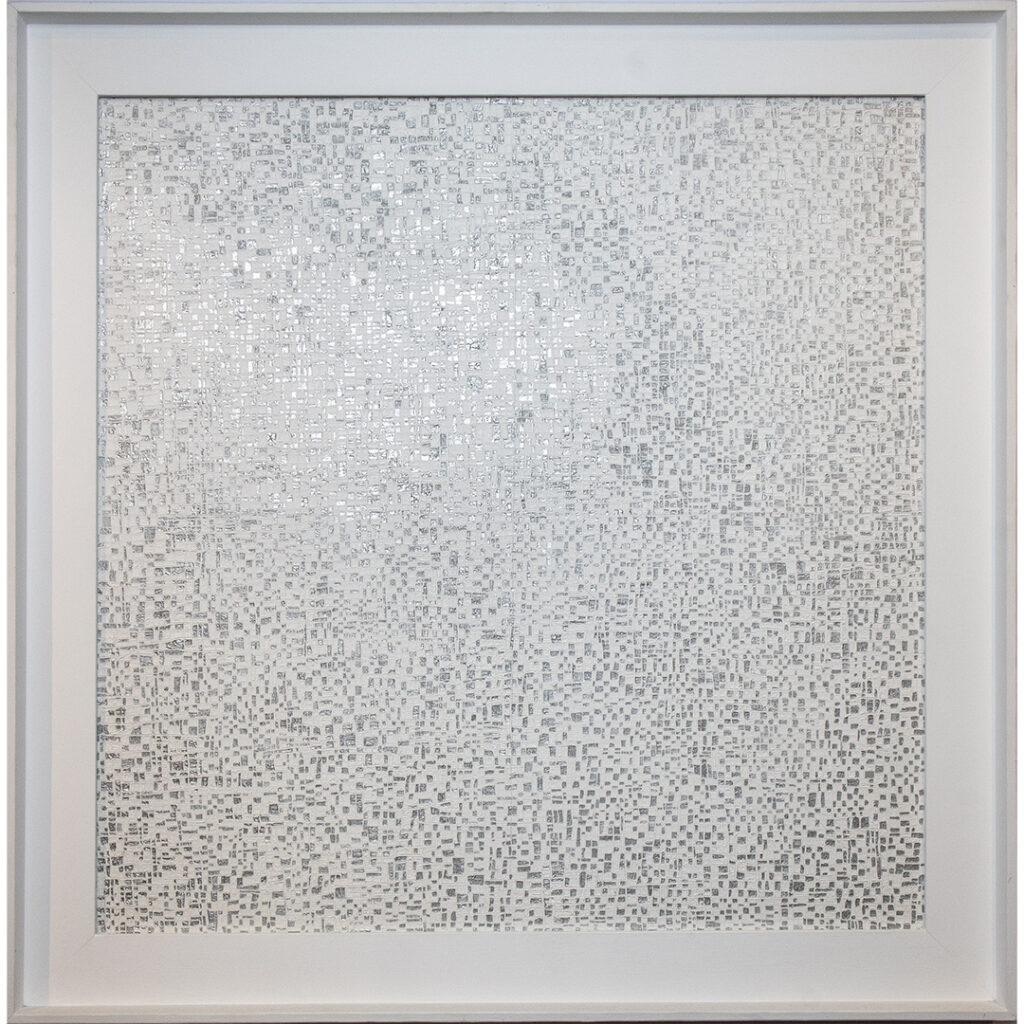
Composition in White

“The key to understanding my work is not to see what is painted, but rather to feel it,” said the artist. This richly colored, multi-layered abstract painting exhibits an ordered, linear, architectural structure that reflects the artists’ training in the Bauhaus style of visual design at the Institute of Design in Chicago under Lazlo Moholy-Nagy. The Bauhaus movement, originating in early 20th century Germany, strove to unite arts and crafts with industrial manufacturing, thus rejuvenating design for everyday life. Hinkle had strong ties to Western Michigan, having grown up in St. Joseph and attended Kalamazoo College. Upon the death of her husband, Richard Koppe, in 1973, Hinkle returned to Kalamazoo to grieve and to manage Koppe’s estate. It was here that she, in fact, died less than a year later.
Show more about this piece

Catherine Hinkle, Composition in White, 1971, oil on canvas. Collection of the Kalamazoo Institute of Arts; Gift of the Marilyn Hinkle Trust, 2016.43.

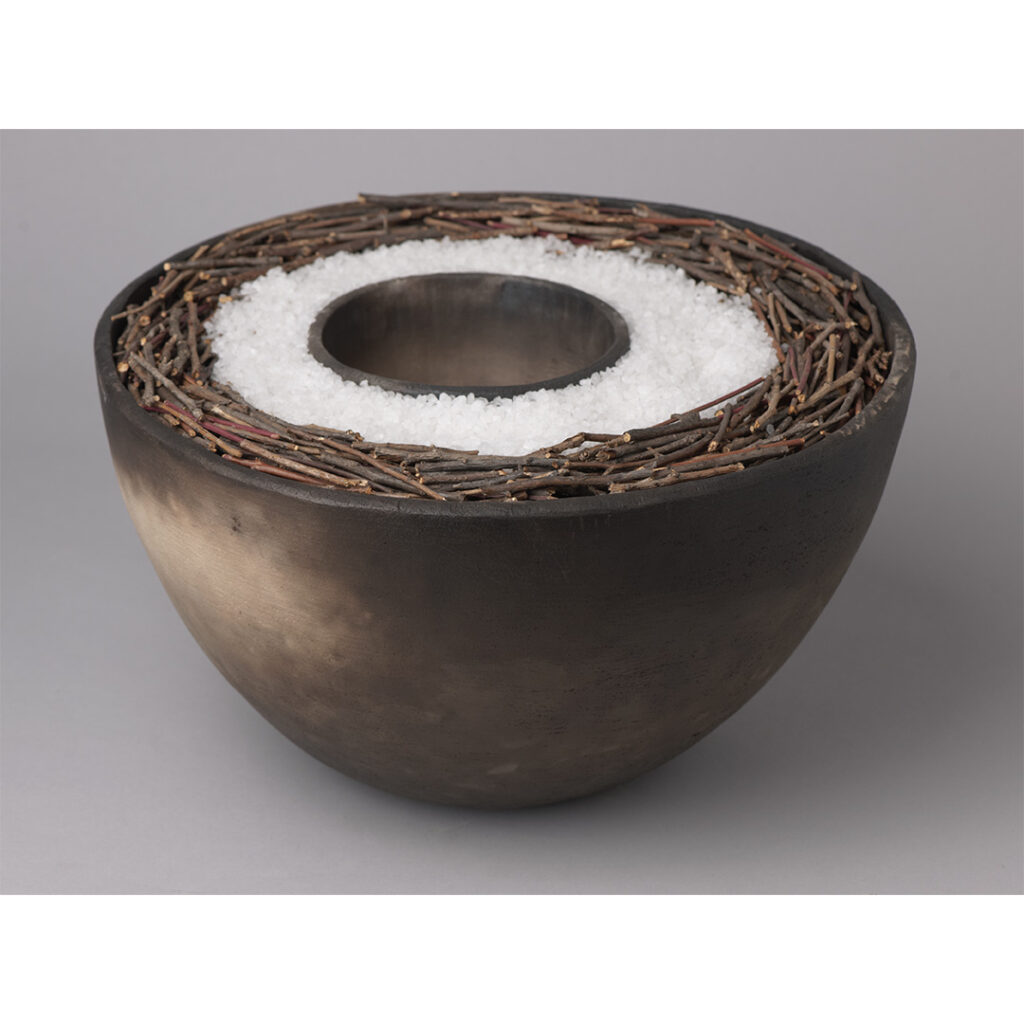
Salt Bowl

A small vessel is contained within a larger one, surrounded and secured by layers of bright white rock salt and stubby twigs. The artist has challenged the traditional vessel form by filling it with non-traditional items. The result is an earthy, textural exploration for all our senses. The rough, knobby twigs and hard, jagged pieces of salt contrast sharply with the smooth clay surface. Notice the layers of dark, light and dark again as you move from the center to the outer edge. This is also visible on the mottled exterior. We can imagine the taste of the salt as well as the sound of crunching twigs. Maria Scott was born and raised in Chicago but has lived in Kalamazoo since 1984 following her graduation from Siena Heights College. Although she sketches new ideas constantly, she rarely works from them. Most often, she allows her sculptures to follow their own course. Her hand built forms are bisque-fired, then buried in sawdust which is set on fire. The burning sawdust leaves the artwork with a smoky finish that the artist feels suits her forms.
Show more about this piece

Maria Scott, Salt Bowl, 1999, pit-fired stoneware, salt, sticks. Collection of the Kalamazoo Institute of Arts; Permanent Collection Fund, 2000.37.

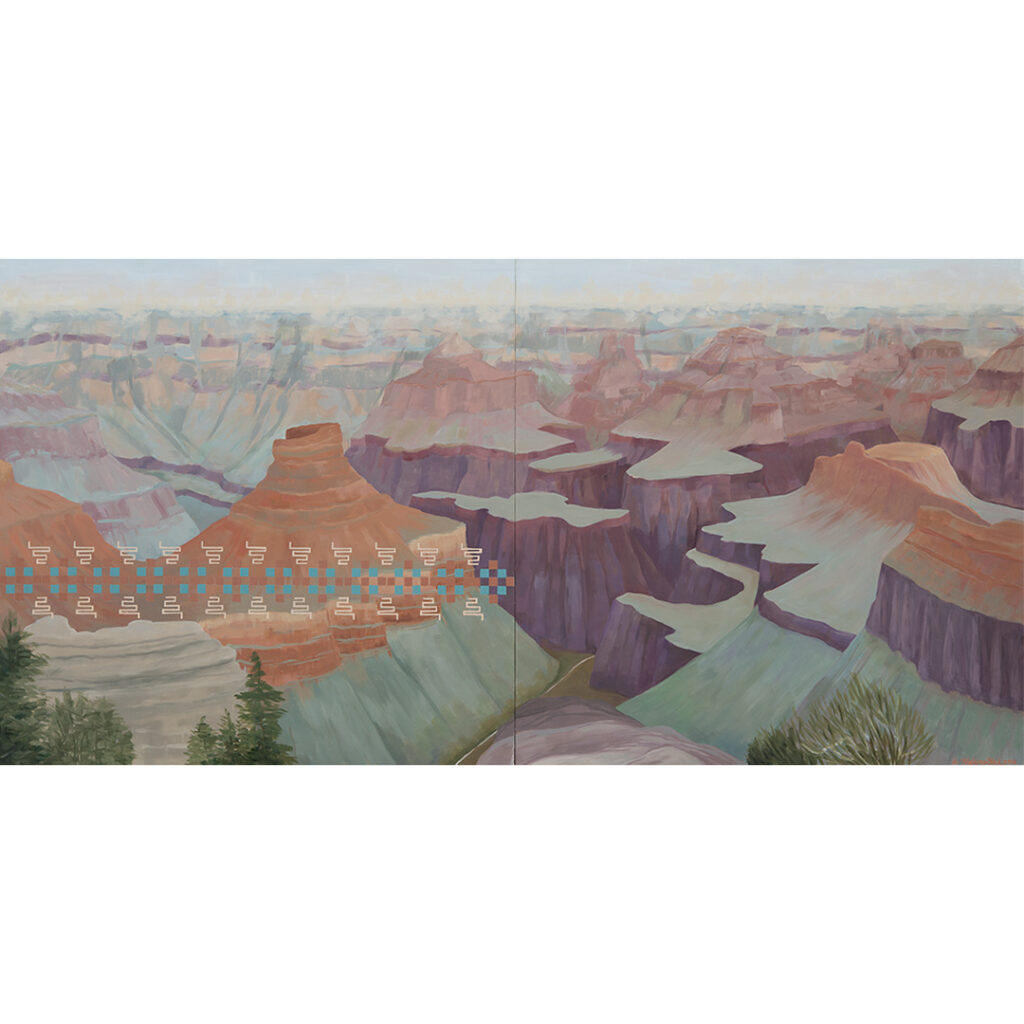
North Rim Clouds

Kay WalkingStick’s (b. 1935, Cherokee) use of a brush to represent three-dimensional landscapes—versus her use of a stencil to make flat, Indigenous patterns—depicts a duality: an interrelationship between the Western European painting tradition in which the artist was trained, and the flat abstraction of her own Indigenous inheritance. Born in Syracuse, New York, to a Cherokee father and a Scotch-Irish mother, the artist has for nearly 40 years been examining the concept of duality concerning her identity in the world.
Show more about this piece

Kay WalkingStick, North Rim Clouds, 2016, Oil on wood panel. Collection of the Kalamazoo Institute of Arts; Elisabeth Claire Lahti Fund, 2018.3.A-B.

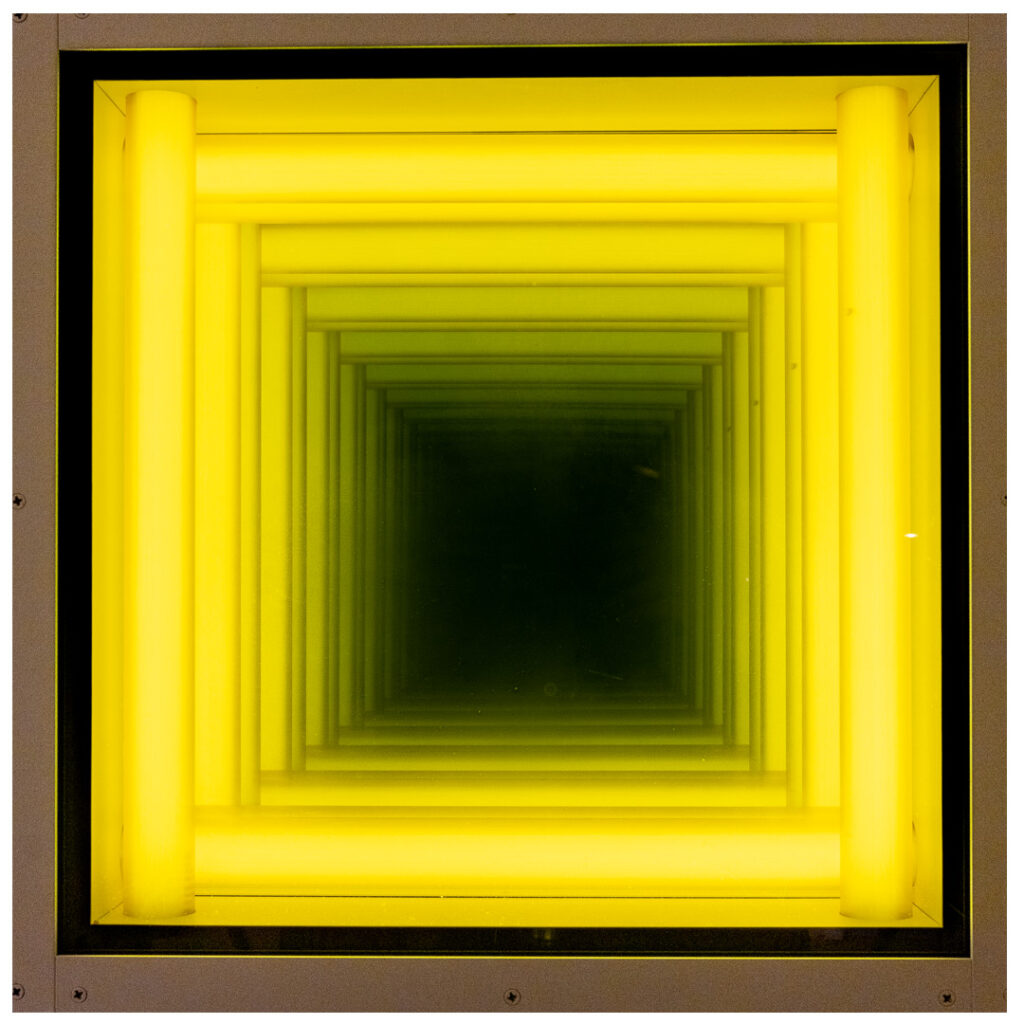
Infinite Yellow

Chul Hyun Ahn’s (b. 1971, South Korea) Infinite Yellow (2004) demonstrates the artist’s innovative fusion of Minimalism, Op Art, and contemporary conceptualism, drawing from geometric abstraction and the sensory manipulation of space. Ahn’s early exposure to American Minimalism of the 1960s, with its focus on clean lines, industrial materials, and optical illusions, deeply influenced his artistic trajectory.
Show more about this piece

Ahn Chul-Hyun, Infinite Yellow, 2004, Plywood, mirror, lights in white frame. Collection of the Kalamazoo Institute of Arts; Gift of Linda M. Hayes, 2018.2.

Trout

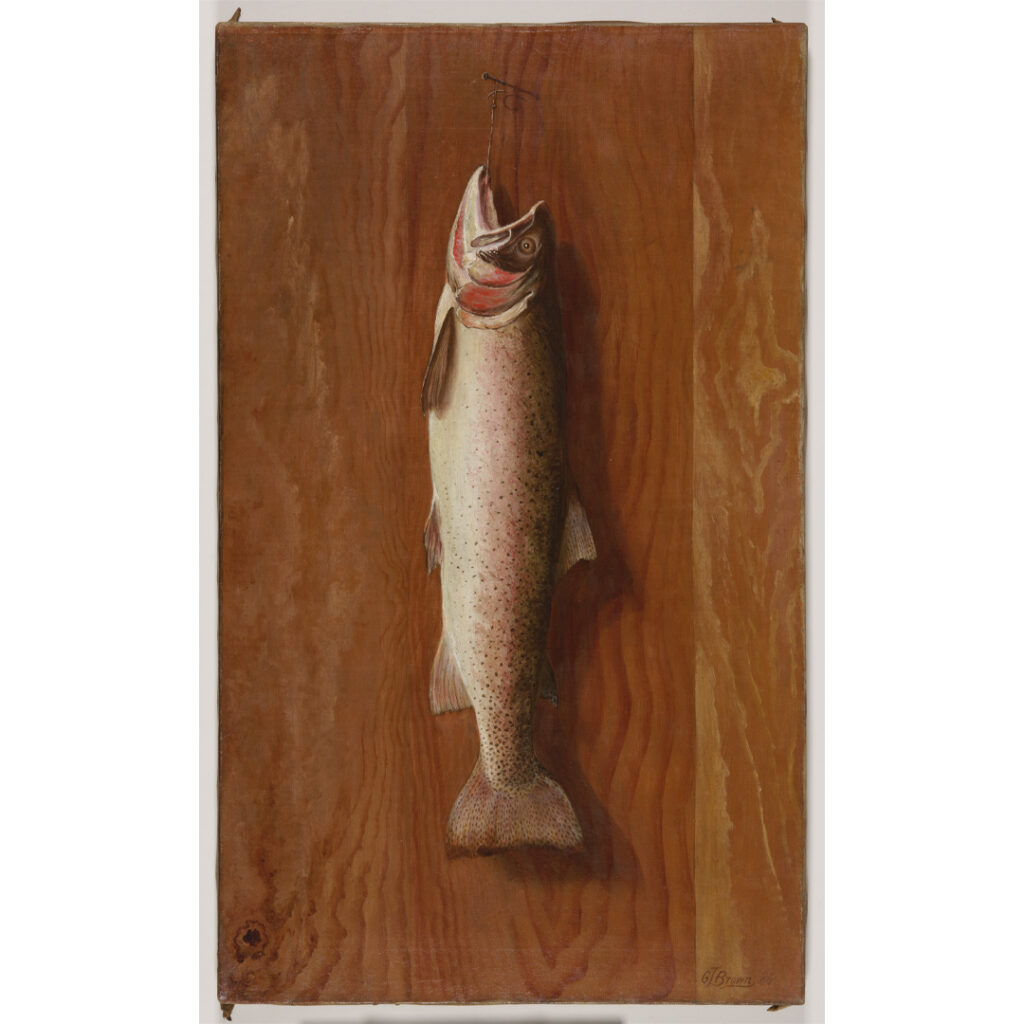
This trout hanging on a board is a fish out of water in more ways than one, as it is also an atypical work from an artist better known for landscape painting. Trompe-l’oeil (French for “fool the eye”) is a category of still life painting popular in America in the late nineteenth century. The most popular trompe-l’oeil subject during this era was a door with hunting equipment, game, creased papers, and other objects affixed to it in order to enhance the illusion. Grafton Tyler Brown’s (1841–1918) more spare approach directs attention to the trout’s rose blush and spotted skin, gaping jaws, and delicately fanning fins, as well as his own skill in convincingly reproducing the appearance of a wooden panel.
Show more about this piece

Grafton Tyler Brown, Trout, 1886, oil on canvas. Collection of the Kalamazoo Institute of Arts; Acquired through the generosity of an anonymous donor, 2012.62.

June

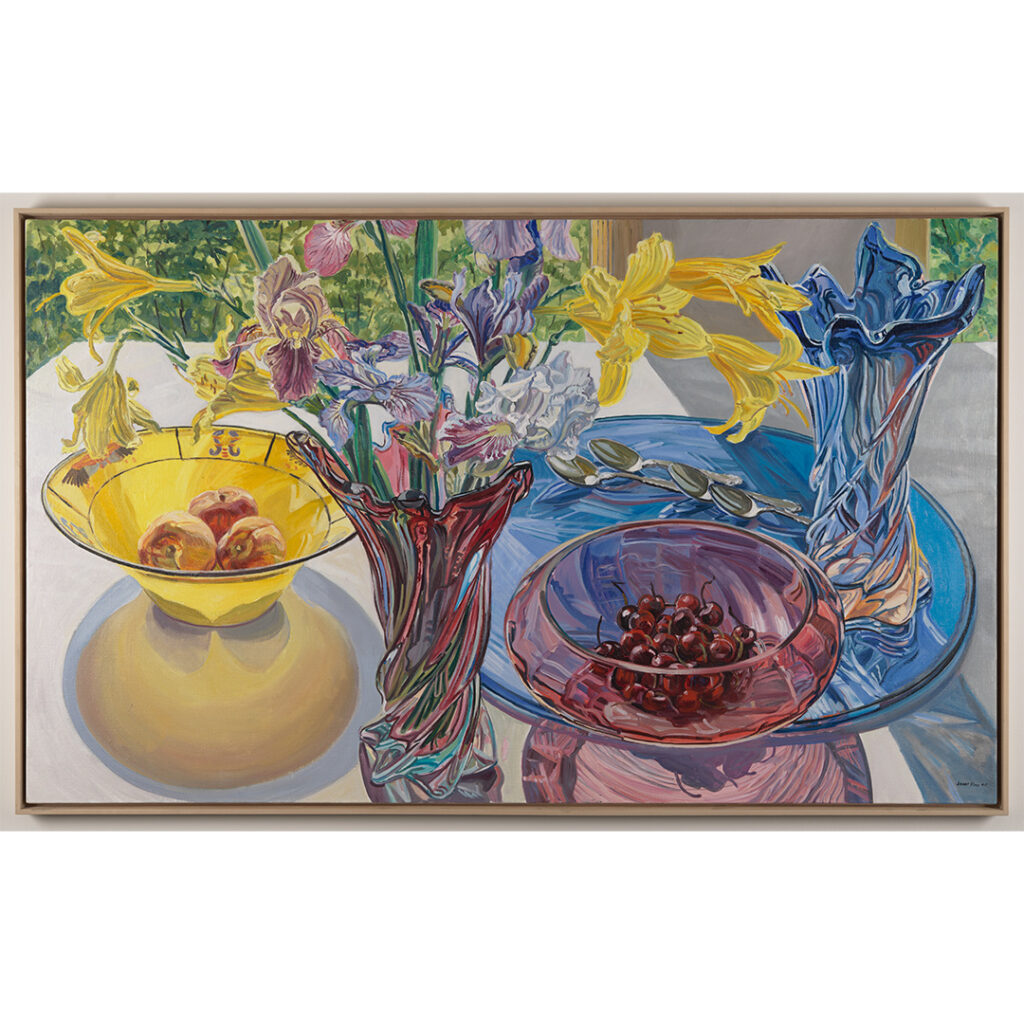
A Janet Fish still life is marked by the play of light that forms a relationship between the objects and unifies the work into a coherent whole. The complex interaction between objects is heightened by Fish’s thick application of paint and off-beat choices of color which blend in the viewer’s eye from a distance. The strong light of a summer day filters through a large window in the upper-left corner. The composition is carefully organized with three primary-colored bowls of red, yellow and blue playing against the strong verticals of the two matching vases. Janet Fish realized early that her real artistic interests lay in the relationship between objects in the real world. For her, still life painting is the most innovative genre available to painters, allowing for the greatest range of expression between realism and abstraction. 
Show more about this piece

Janet Fish, June, 1999, oil on canvas. Collection of the Kalamazoo Institute of Arts; Gift of the Garside Family in memory of James W. and Thelma Garside, 2000.17.

Wall Piece

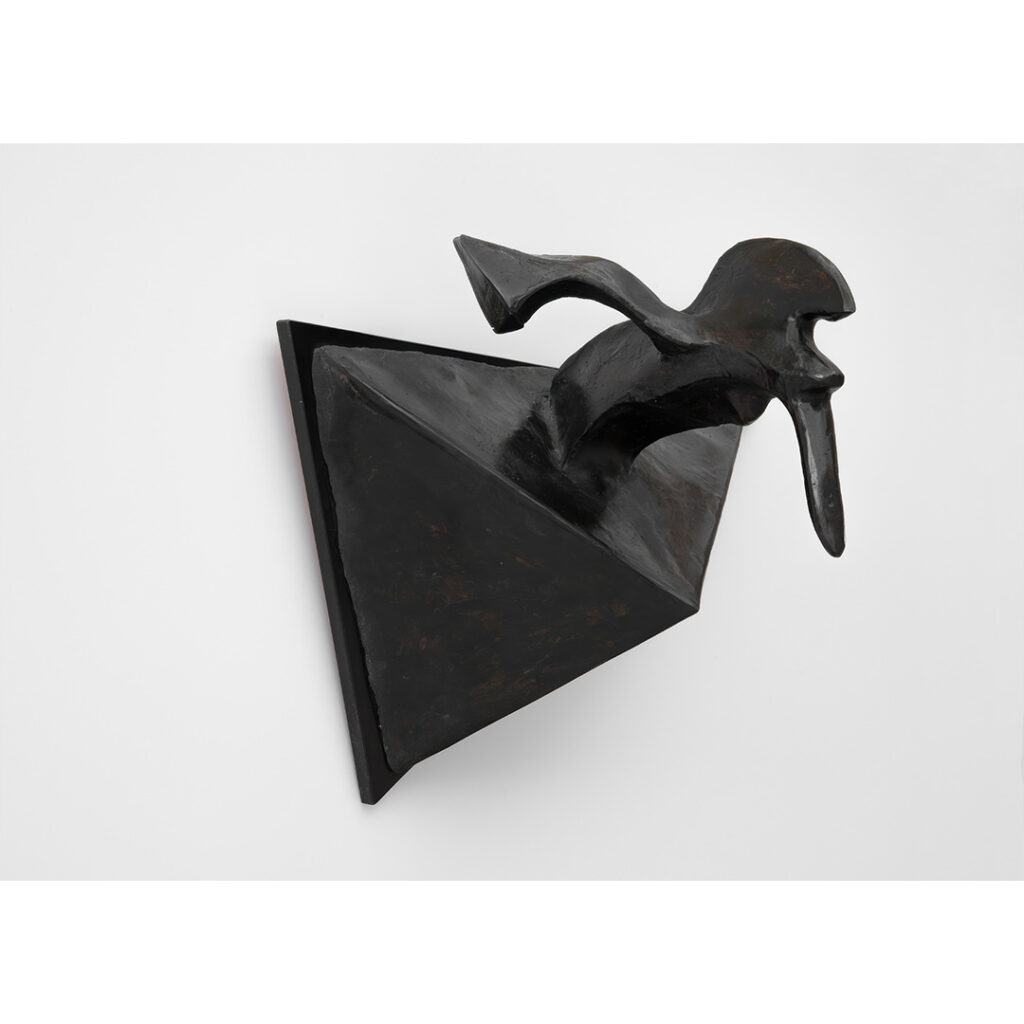
Richard Hunt’s (1935–2023) Wall Piece, which rises from a triangular base, exemplifies his ability to merge the organic with the abstract. The sculpture’s form, seemingly in flight, captures the essence of movement and transformation. This interplay between grounded and airborne elements reflects Hunt’s interest in the natural world and its inherent dynamism. His reflections on nature often manifest in his work as fluid, evolving shapes that suggest growth, evolution, and the unknown.
Show more about this piece

Richard Hunt, Wall Piece, 1969, cast bronze, patina, black. Collection of the Kalamazoo Institute of Arts; Gift of the artist, 1969/70.63.

Twilight

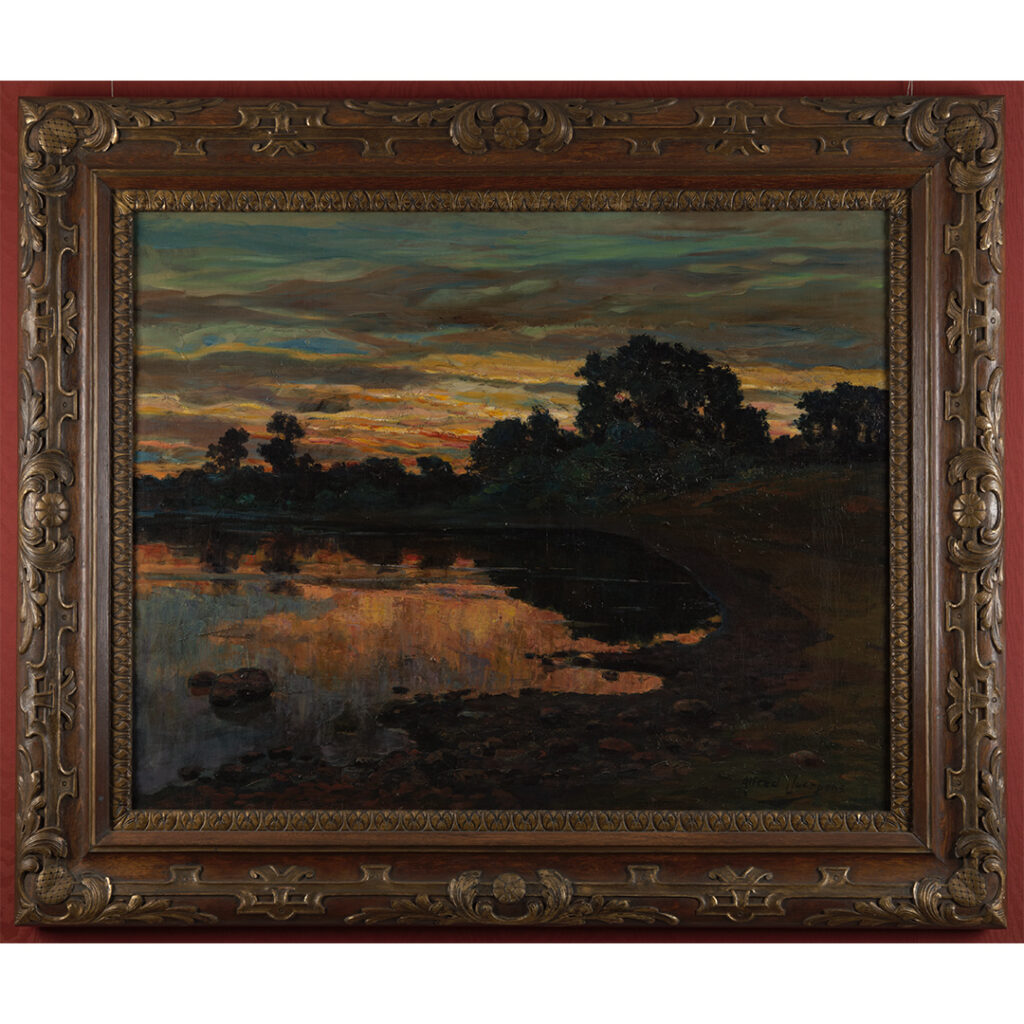
Although dark and serene, this scene is energized by vibrant colors. The atmospheric glow of the setting sun is a common subject among painters who, like Alfred Juergens (1866–1934), pursued the so-called Tonalist style in the late nineteenth century. Tonalist artists painted hazy or dark landscapes that evoked a melancholy mood or conveyed a spiritual experience of nature. The glowing color of dawn or dusk illuminating an uninhabited landscape can give Tonalist paintings a calm and eerie quality. Later in his career Juergens abandoned Tonalism in favor of the bright colors and cheery subjects common among early-twentieth-century American Impressionists.
Show more about this piece

Alfred Juergens, Twilight, ca. 1890-92, oil on canvas. Collection of the Kalamazoo Institute of Arts; Gift of the Dryer Family Foundation and Permanent Collection Fund, 1995/6.12.

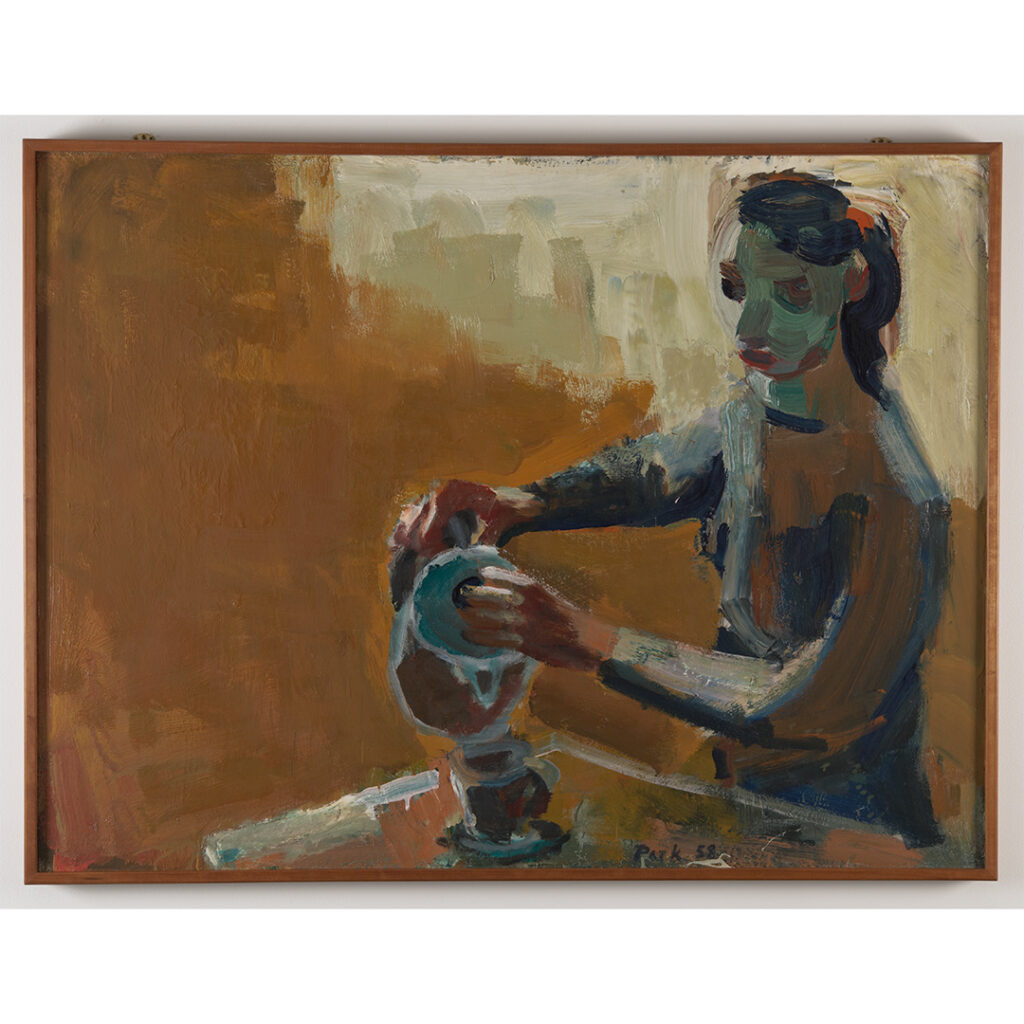
Woman with Coffee Pot

Considered one of David Park’s (1911– 1960) most groundbreaking interiors, Woman with Coffee Pot illuminates the artist’s ability to create tension between recognizable subject matter and the expressive possibilities of paint. In Woman with Coffee Pot, a few bold brushstrokes give form to a woman’s arms and hands, capturing the simple, everyday act of pouring coffee. Park’s use of broad, gestural strokes and a muted color palette strips the scene of extraneous detail, focusing instead on the monumental nature of the gesture. The resulting composition elevates this mundane act to a moment of profound significance.
Show more about this piece

David Park, Woman with Coffee Pot, 1958, oil on canvas. Collection of the Kalamazoo Institute of Arts; Director’s Fund, 1968/9.88.

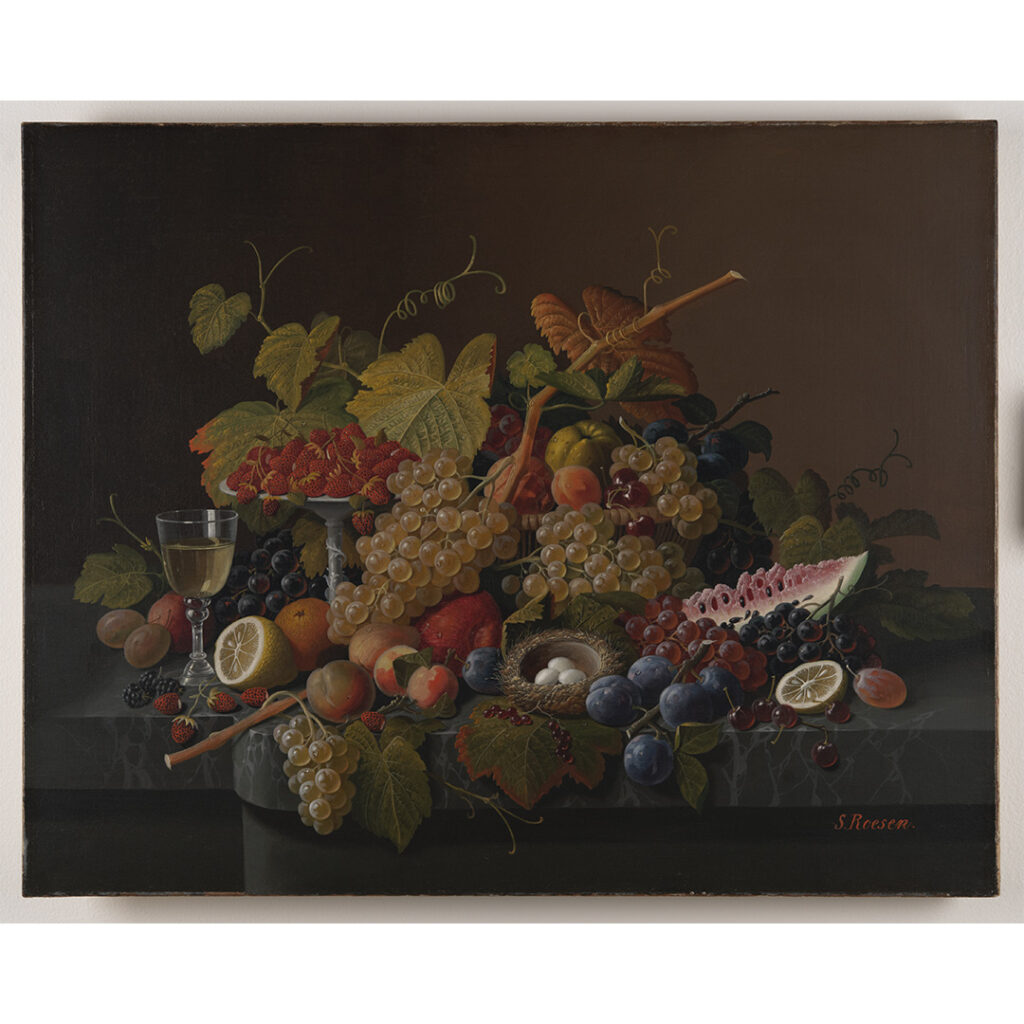
Still Life with Fruit and Bird’s Nest

Severin Roesen (1815–1872, Germany) was a prolific painter celebrated for his overflowing fruit-and-flower-filled still lifes. These meticulous paintings helped him establish a reputation as one of America’s most important and skilled still life painters of the mid-nineteenth century. He modeled his work after seventeenth- and early eighteenth-century Dutch painting, in which fruit and flowers were also artificially arranged and painstaking attention to the careful depiction of fine details was celebrated.
Show more about this piece

Severin Roesen, Still Life with Fruit and Bird’s Nest, n.d., oil on canvas. Collection of the Kalamazoo Institute of Arts; Gift of Findlay Gallery by exchange, 2013.21.

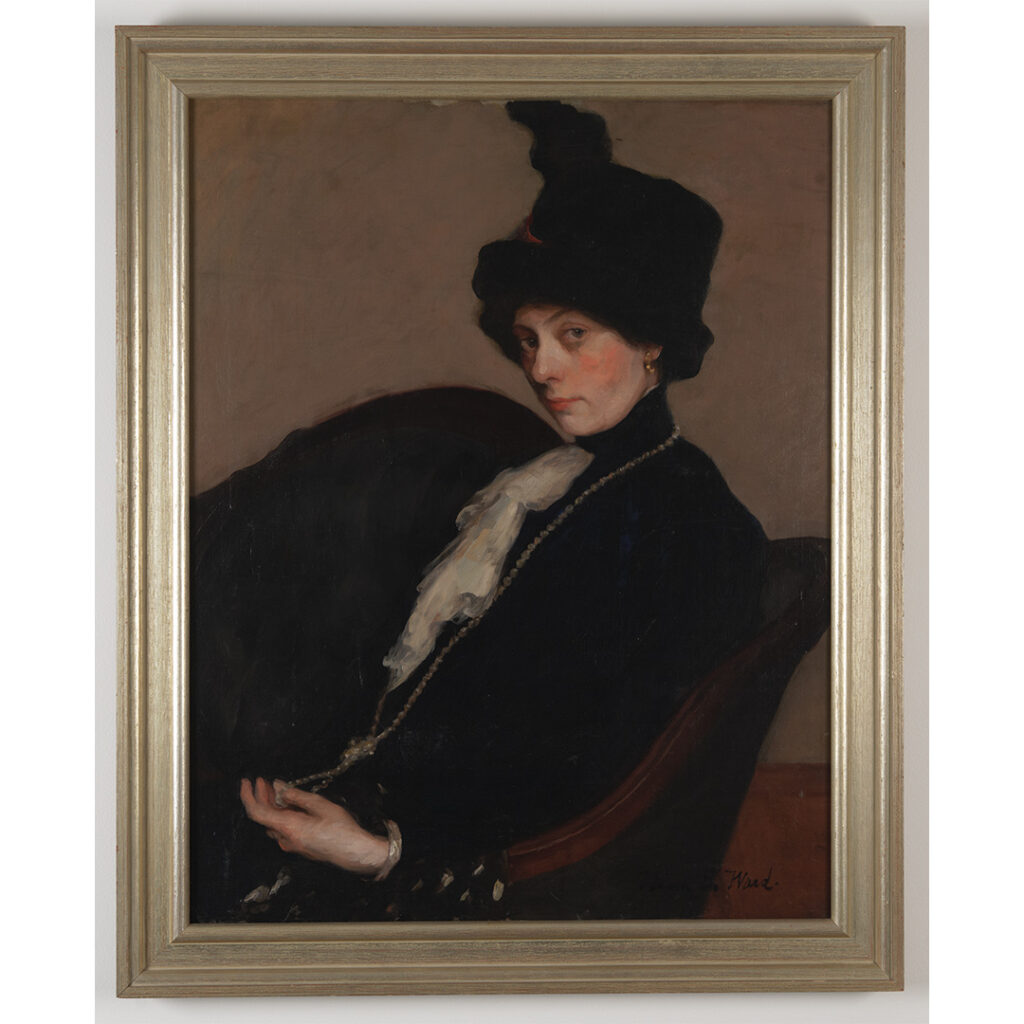
Portrait of a Lady in Black

Nina Belle Ward (1885–1944), a promising talent in early twentieth-century American portraiture, captured the subtleties of human emotion with grace and skill. Portrait of a Lady in Black exemplifies her mastery in both technical execution and psychological depth. The painting portrays a young woman dressed in rich, elegant at- tire—her black hat, white lace blouse, and string of pearls all add to her air of refinement. Yet it is the subject’s enigmatic expression that defines the painting. With a slight glance directed askance, her face follows the viewer, creating an uncanny sense of intimacy and mystery.
Show more about this piece

Nina Belle Ward, Portrait of a Lady in Black, 1912, oil on canvas. Collection of the Kalamazoo Institute of Arts; Gift of A. Pitzer Ward, 1960/1.11.

Descriptions are excerpted from the KIA’s new publication, 101 Legendary Selections from the Kalamazoo Institute of Arts, available for purchase in the Gallery Shop.

Thank you to those who have adopted works of art:

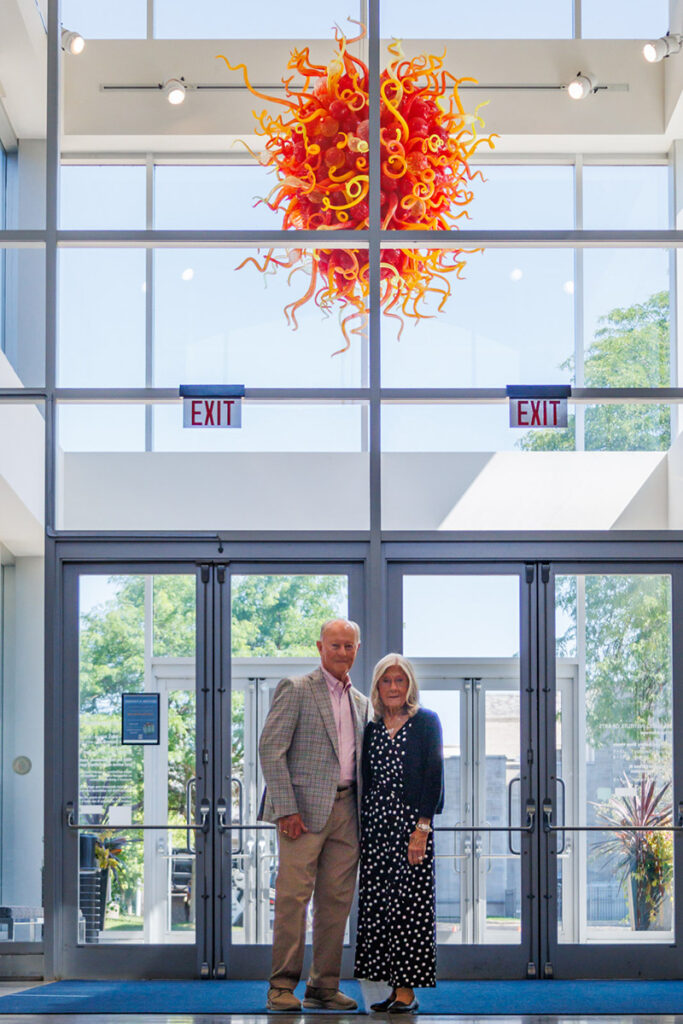
Dale Chihuly, Kalamazoo Ruby Light Chandelier
Adopted by Norm and Bonnie Langeland in honor of their 60th wedding anniversary

Mary Abbott, Portrait of Elaine de Kooning
Adopted by Maggie Coleman

Olga Albizu, Untitled
Adopted by Susan Carter & Jim Rojeski

Deborah Butterfield, Hoku (Untitled.2411)
Adopted by Elizabeth Upjohn Mason

Robert Seldon Duncanson, Heart of the Andes
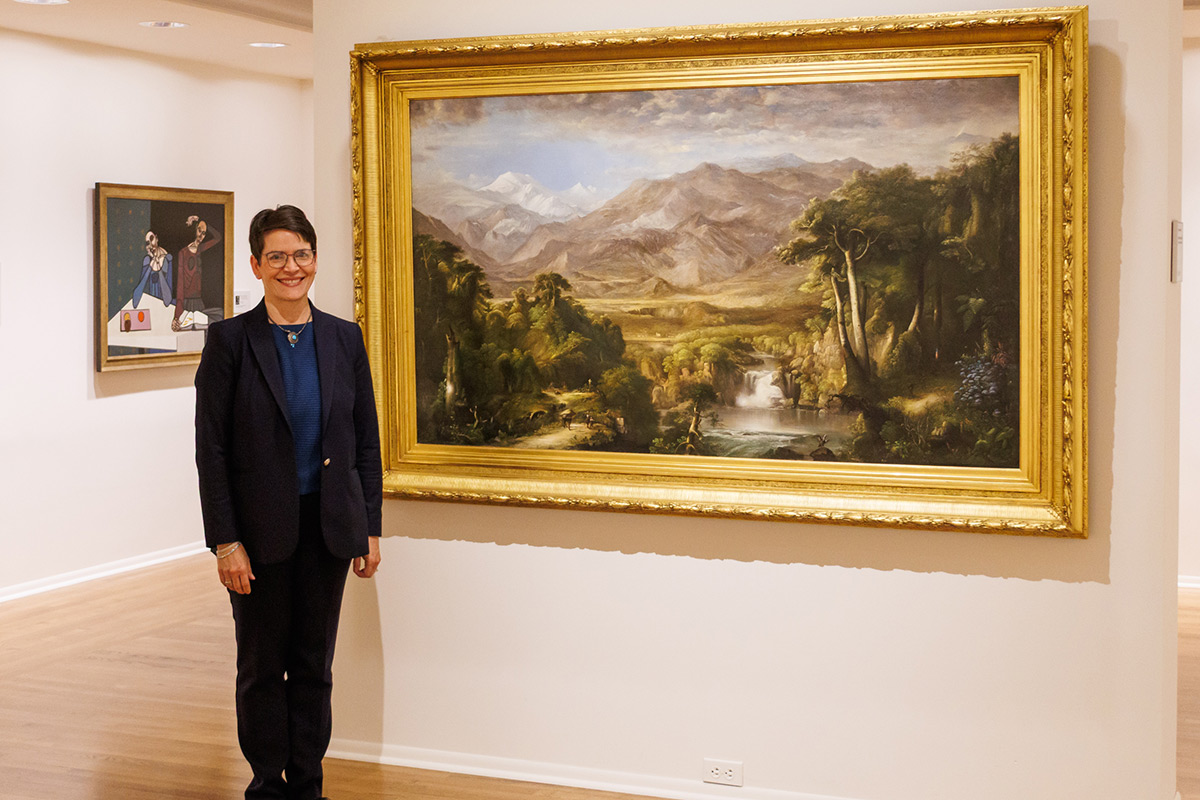
Adopted by Kim Loftus

Marilyn Johnson, Stuart Avenue, 2002
Adopted by Lauren Tripp in memory of Ethel Groos

Hughie Lee-Smith, The Spectators
Adopted by Dean J. Toriello

Edmonia Lewis, The Marriage of Hiawatha
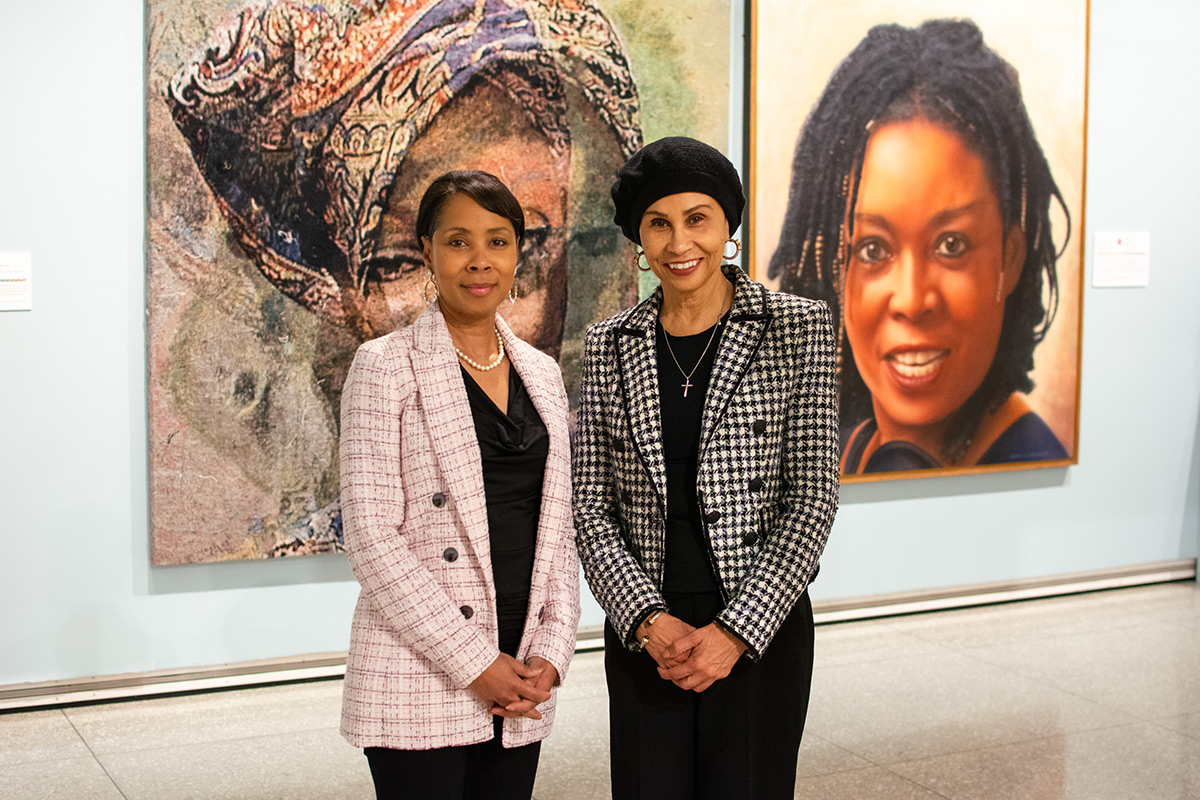
Adopted by Dr. Cheryl Dickson

Hung Liu, Lady Lotus
Adopted by Christine Walker

Richard Pousette-Dart, By the Sea
Adopted by Oliver S. Howell

Hiram Powers, George Washington
Adopted by The Joseph B. Westnedge Chapter Sons of the American Revolution

Miriam Schapiro, The Square Root of Paradise
Adopted by Ina Whitney 

Tiffany Studios, Woodbine Table Lamp
Adopted by an anonymous donor

Norm & Bonnie Langeland with Kalamazoo Ruby Light Chandelier