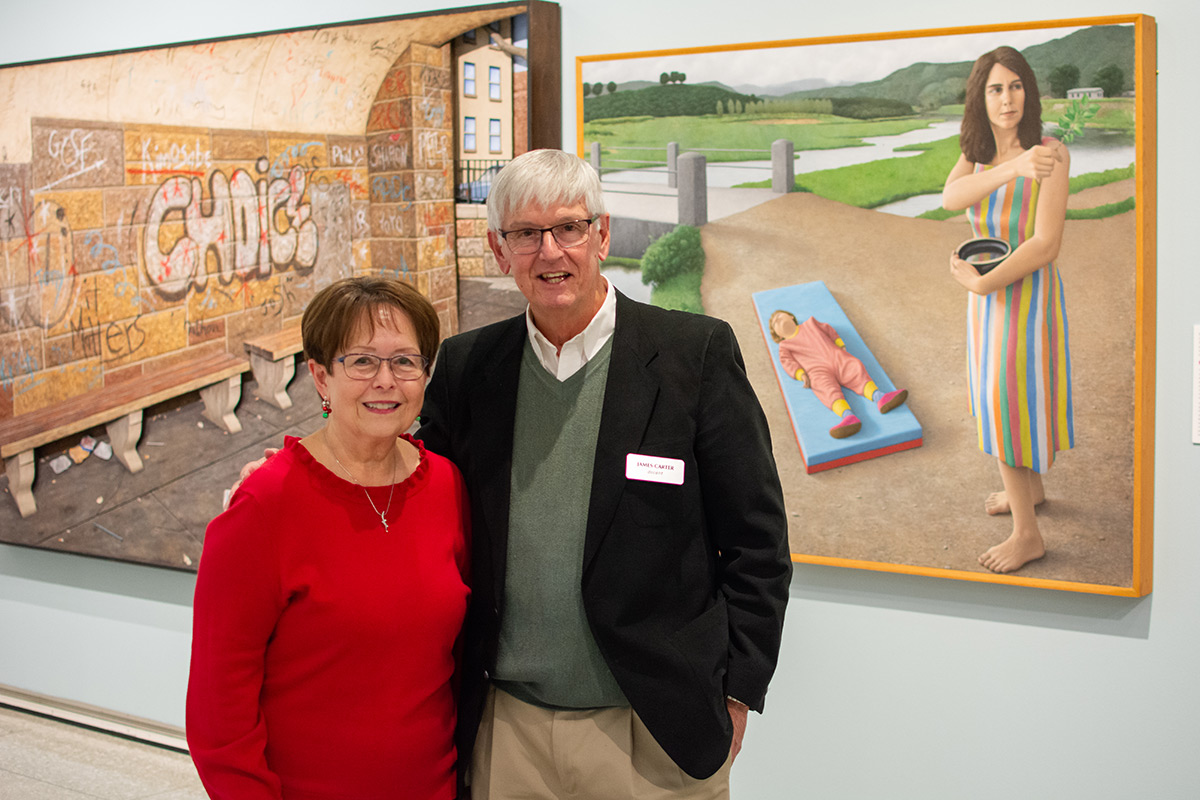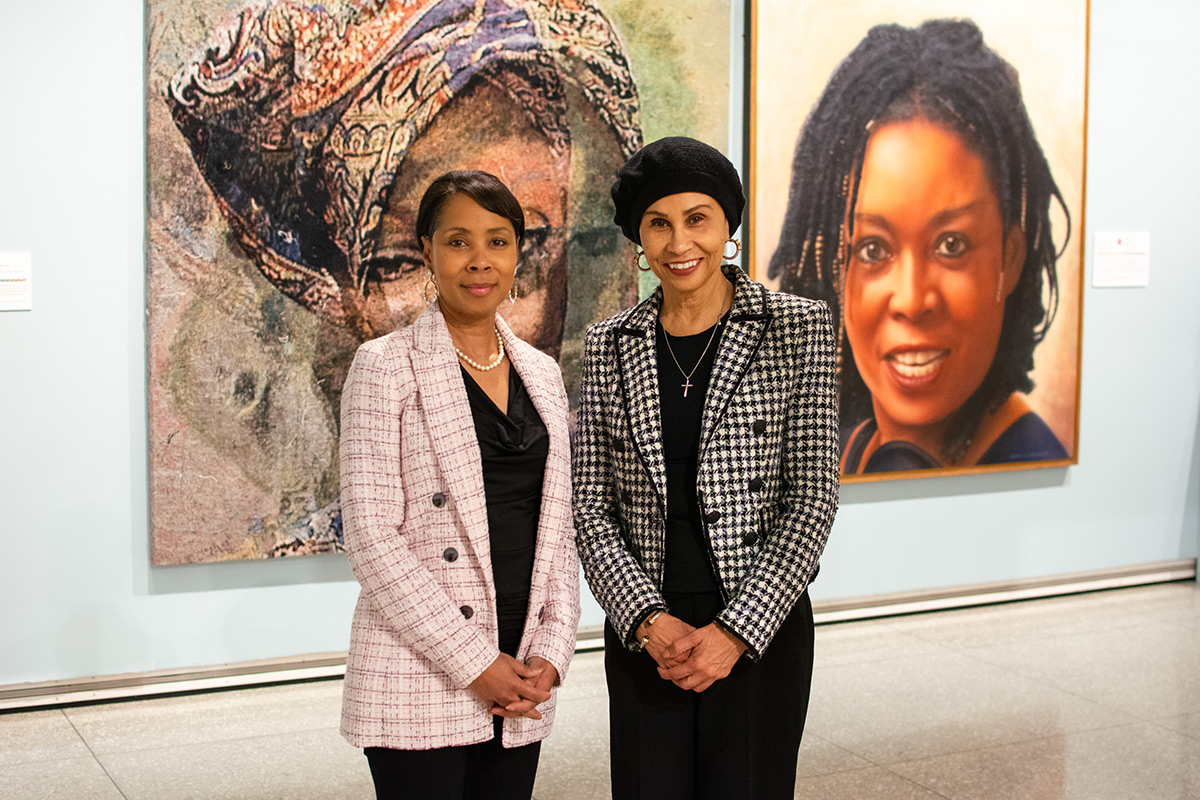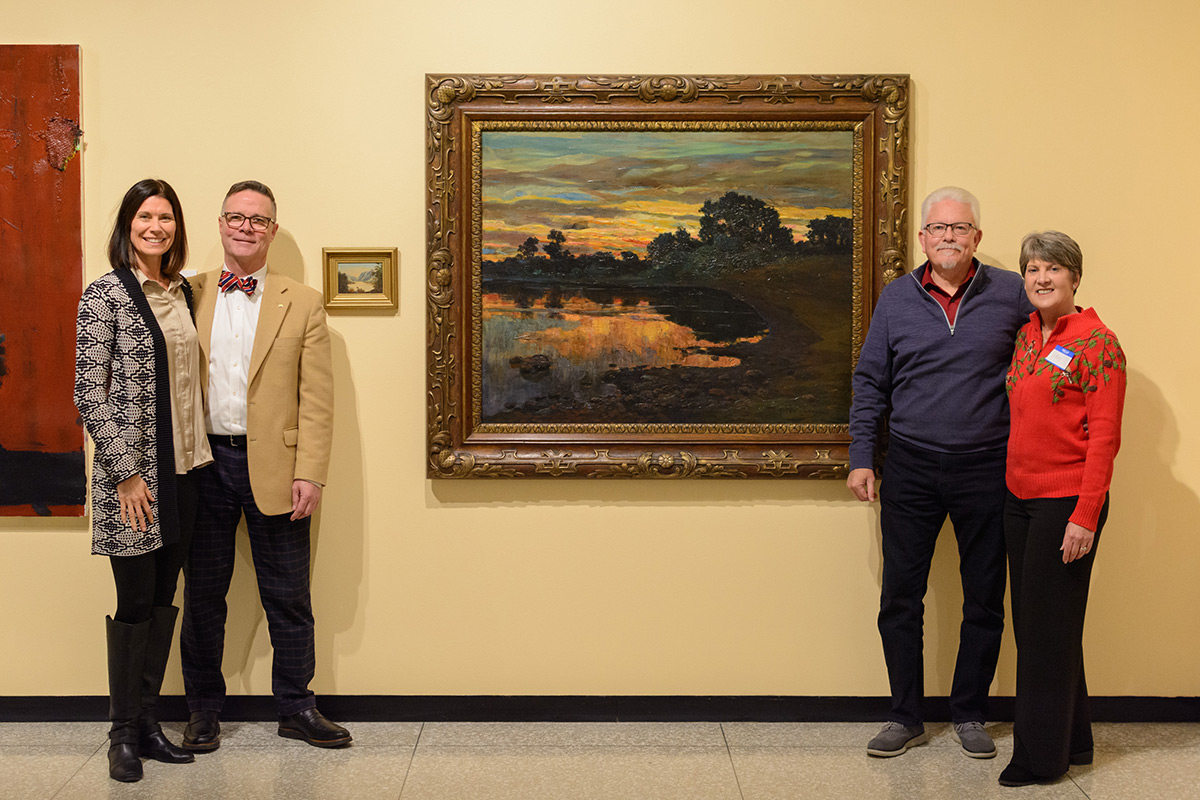
We are thrilled to continue our Adopt a Work of Art program with 23 unique pieces of art from the KIA’s permanent collection. This exclusive opportunity allows you to make an impact by adopting a remarkable work of art, playing a direct role in supporting our permanent collection for future generations.
As an adopter, you will receive:
Your name proudly displayed on the label of the adopted artwork*
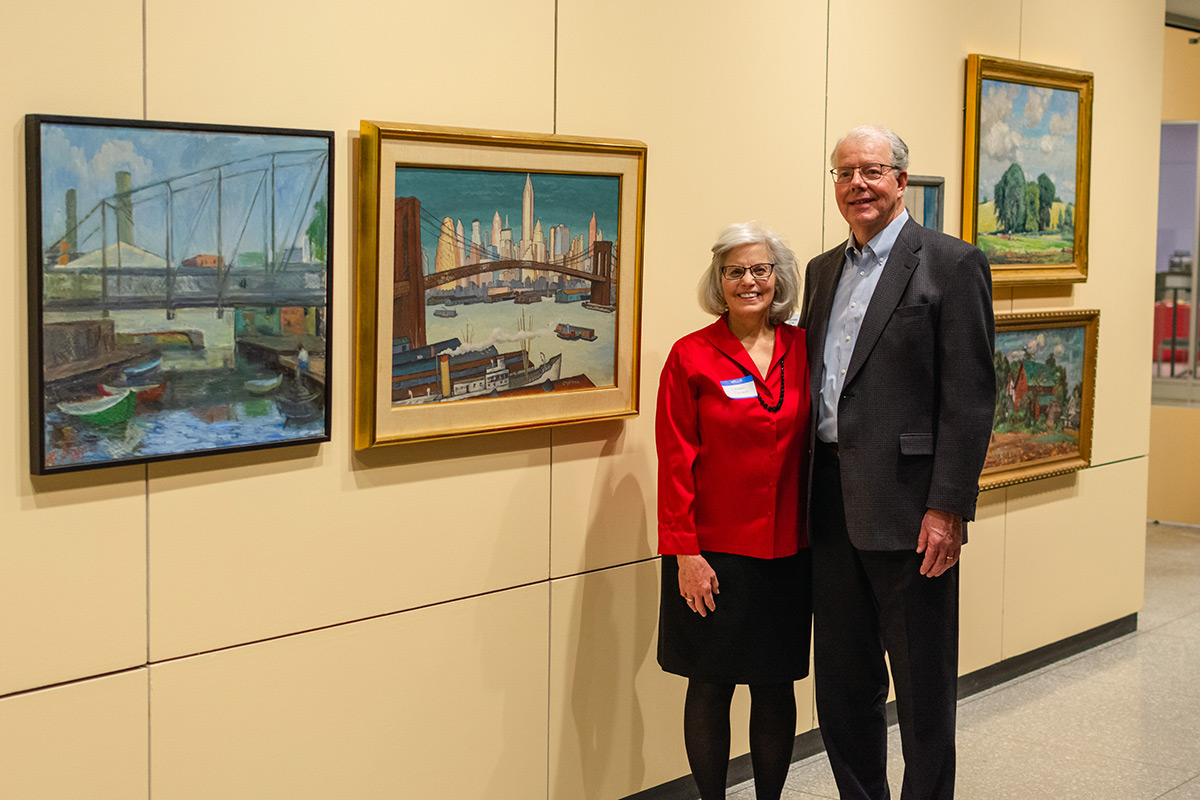
A picture of you with the adopted artwork*
Your name on the website, lobby digital monitor, and recognition in Sightlines
A special gift to commemorate your selected artwork
The Adopt a Work of Art program will run from September 2025 through August 2026. Recognition will be given from the date of the adoption through August 2026.
For more information, please contact Josiah Solis, Donor & Corporate Relations Manager, .
*These benefits are available when the work is on display, which is at the sole discretion of the Curatorial Department.
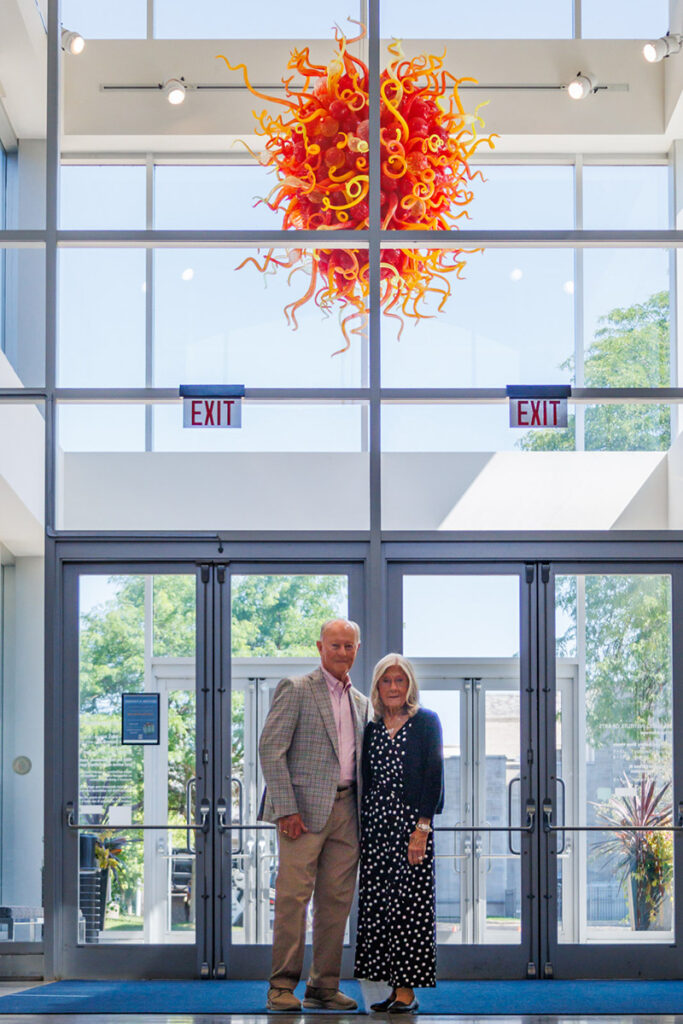
Weighing nearly 1,000 pounds, this sculpture is composed of 464 individually blown pieces of glass attached to a stainless steel armature measuring seven feet in diameter. This piece is part of Dale Chihuly’s chandelier series. Chihuly is recognized internationally for his innovative designs and new concepts in decorative glass. After studying sculpture and glassblowing at the University of Wisconsin, he experimented with team glassblowing, which enabled him to produce large-scale works. Although he hasn’t blown glass since 1979, Chihuly creates the concept behind each work, which he relays by sketches, paintings, and words to the master glassblowers who then produce his vision.
Show more about this piece
Dale Chihuly, Kalamazoo Ruby Light Chandelier, 1998, blown glass, wire, armature. Collection of the Kalamazoo Institute of Arts; Gift of Christopher and Margo Light, 1998.8.
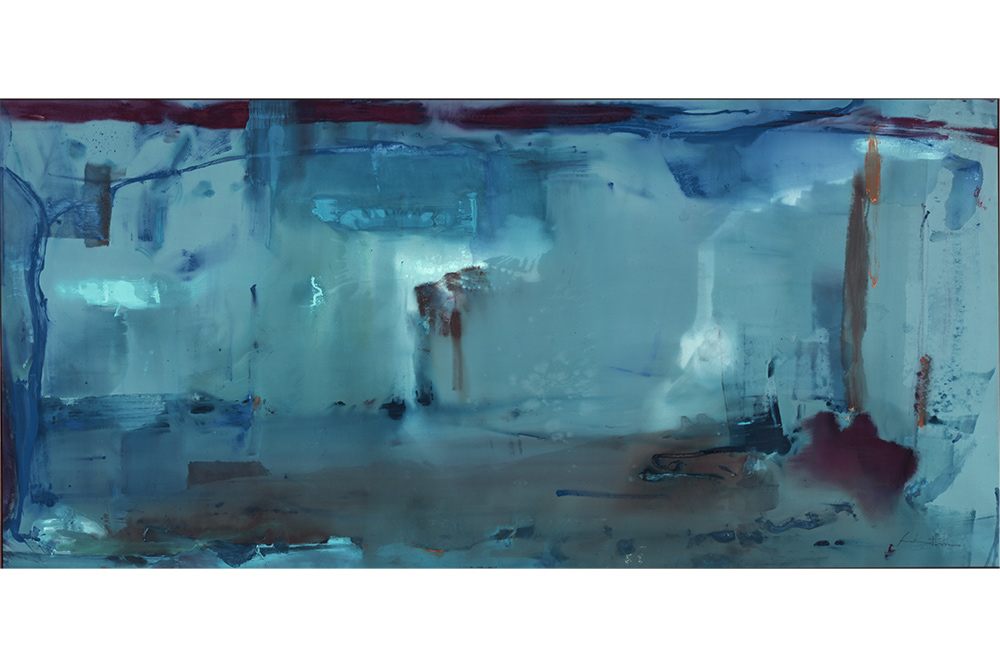
Helen Frankenthaler (1928–2011) was one of the leading artists of the second-generation Abstract Expressionists in New York. This second generation focused more on overall color composition than on the expressive brushstrokes and splatters that interested first-generation artists like Jackson Pollock. In the early 1950s Frankenthaler’s novel soak-staining technique put her at the forefront of the development of Color Field painting (in which color is applied in expressive large areas that might seem to immerse the viewer) and Lyrical Abstraction (which countered minimalism with expressive, loose painting and occasional imagery). Frankenthaler’s use of immense scale and moody hues aims to evoke an emotional experience in the viewer. Code Blue was created on the floor of her studio with large brushes, mops, brooms, and buckets. Frankenthaler challenged traditional painting techniques by using thin washes of paint juxtaposed with clumps of pigment. Her absorbent, unprimed canvases allowed the layers of paint to soak into the painting’s surface. Code Blue’s bluish-green stains provide a murky depth that absorbs and contains. Her dynamic gestures, bold application of color, and spontaneous processes make the paint itself the subject of the work. Frankenthaler’s stains feel weightless, drawing depth into her compositions.
Show more about this piece
Code Blue will be on loan with the Gagosian Gallery in New York City from April–September 2026. Adopting this artwork supports the loan and helps a wider audience discover a new favorite.
Helen Frankenthaler, Code Blue, 1980, acrylic on canvas. Collection of the Kalamazoo Institute of Arts; National Endowment for the Arts Matching Museum Grant and donation from anonymous donor, 1979/80.82
Many of Mary Abbott’s (1921–2019) figural paintings present her sitters using non-natural colors combined with expressive and gestural brushstrokes. In Portrait of Elaine de Kooning, Abbott depicts a fellow artist and close friend seated with an open book and a cat on her lap. The chair she sits on is defined but barely detailed—just a few simple shapes of brown paint. Is she seated in an interior, in front of a large picture window, or outdoors in a garden? The overlapping forms of color that make up the abstracted background give viewers few clues as to her exact location.
Show more about this piece
Mary Abbott, Portrait of Elaine de Kooning, 1948, oil on canvas. Collection of the Kalamazoo Institute of Arts; Jim Bridenstine Acquisition Fund, 2019.1.
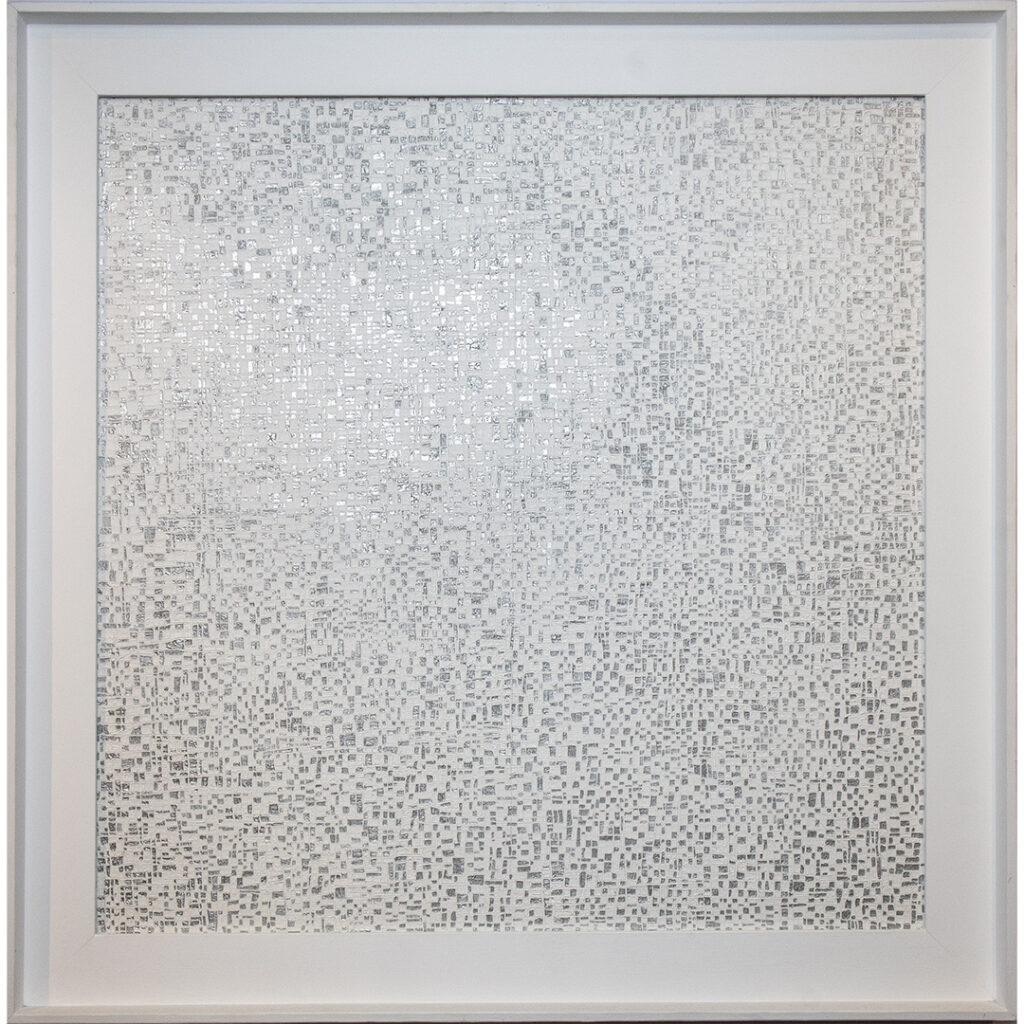
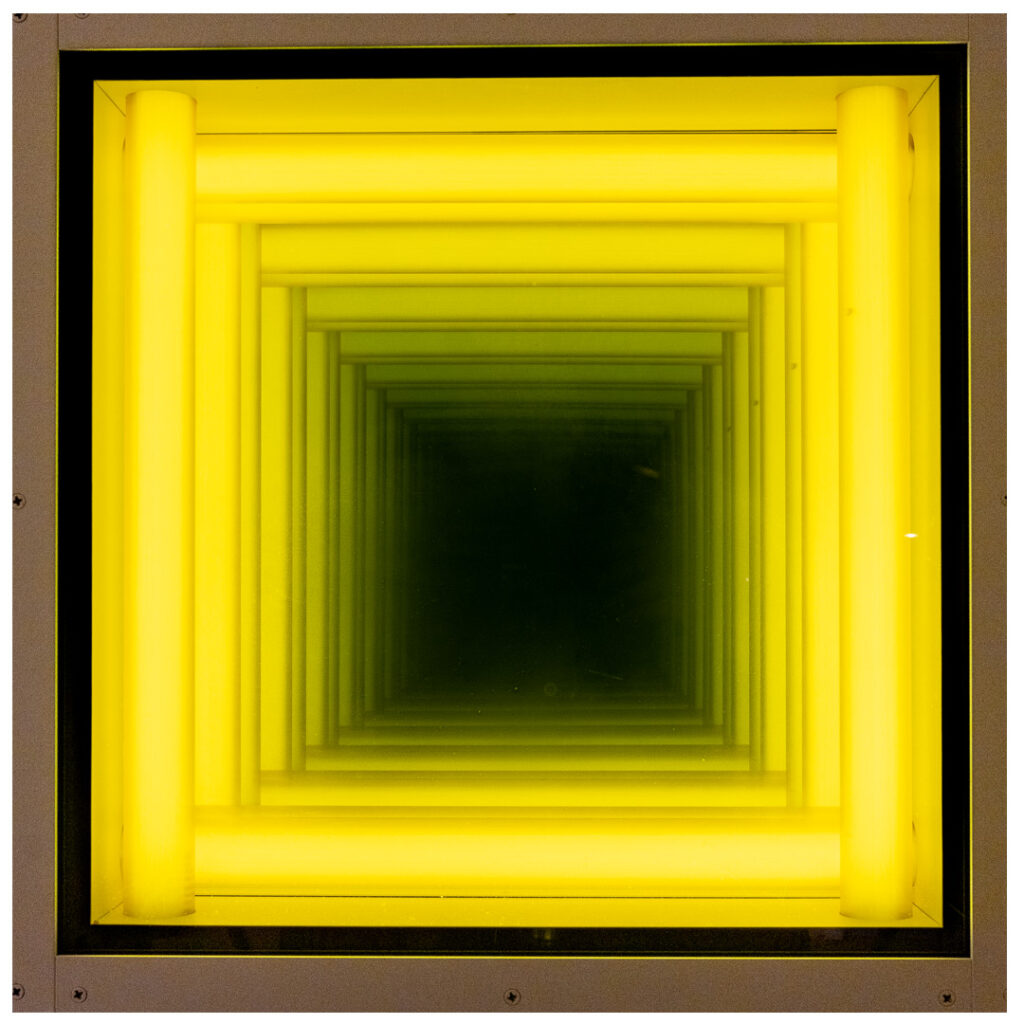
Chul Hyun Ahn’s (b. 1971, South Korea) Infinite Yellow (2004) demonstrates the artist’s innovative fusion of Minimalism, Op Art, and contemporary conceptualism, drawing from geometric abstraction and the sensory manipulation of space. Ahn’s early exposure to American Minimalism of the 1960s, with its focus on clean lines, industrial materials, and optical illusions, deeply influenced his artistic trajectory.
Show more about this piece
Ahn Chul-Hyun, Infinite Yellow, 2004, Plywood, mirror, lights in white frame. Collection of the Kalamazoo Institute of Arts; Gift of Linda M. Hayes, 2018.2.
Untitled
Adopted by Susan Carter & Jim Rojeski
Olga Albizu (1924–2005) was a leading Puerto Rican abstractionist celebrated for her dynamic use of color and form. An early student of Esteban Vincente at the Universidad de Puerto Rico and then at Hans Hofmann’s New York–based School of Fine Arts (1948–1951), Albizu’s practice evolved through various modernist trends. However, her most recognized style is marked by overlapping, rhythmic masses of color and abstracted geometric shapes.
Show more about this piece
Olga Albizu, Untitled, ca. 1965, oil on canvas. Collection of the Kalamazoo Institute of Arts; purchased in memory of David and Muriel Gregg through the generosity of their estate, 2018.23.
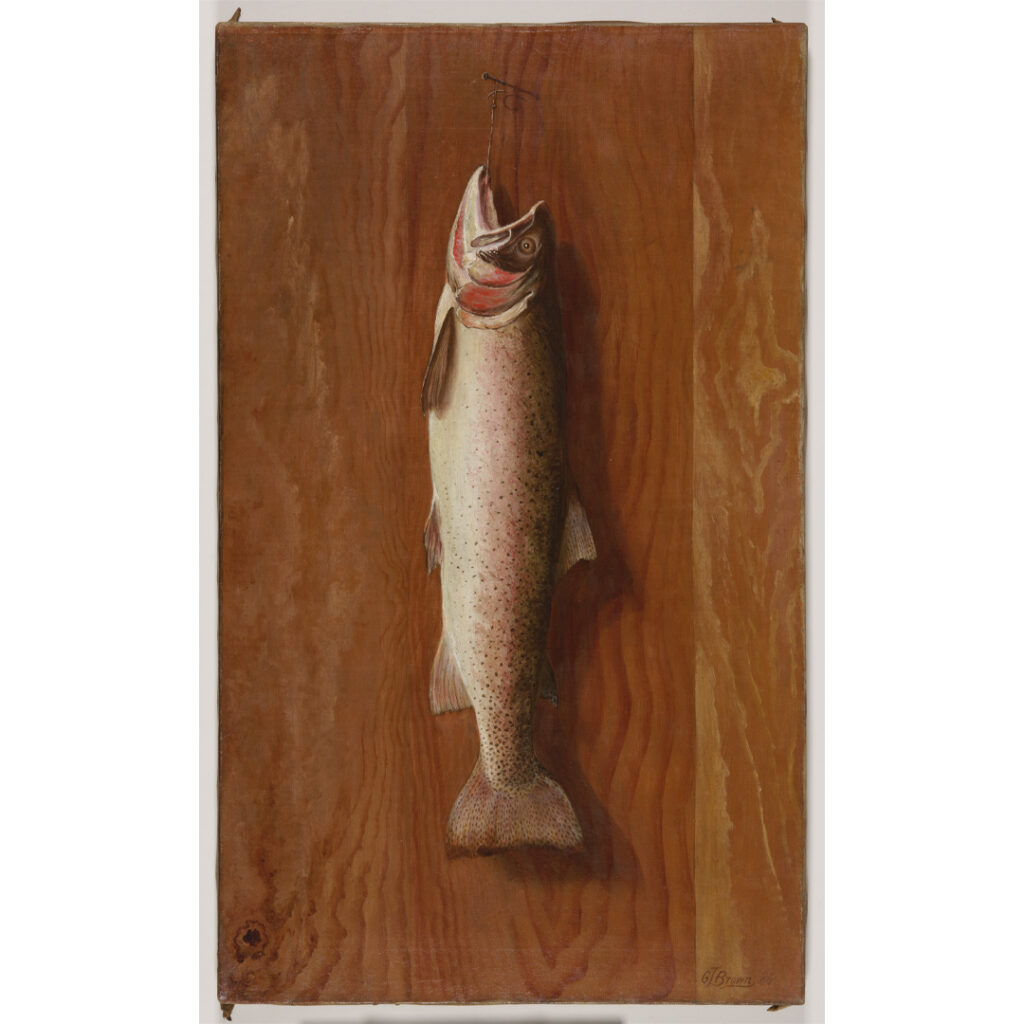
This trout hanging on a board is a fish out of water in more ways than one, as it is also an atypical work from an artist better known for landscape painting. Trompe-l’oeil (French for “fool the eye”) is a category of still life painting popular in America in the late nineteenth century. The most popular trompe-l’oeil subject during this era was a door with hunting equipment, game, creased papers, and other objects affixed to it in order to enhance the illusion. Grafton Tyler Brown’s (1841–1918) more spare approach directs attention to the trout’s rose blush and spotted skin, gaping jaws, and delicately fanning fins, as well as his own skill in convincingly reproducing the appearance of a wooden panel.
Show more about this piece
Grafton Tyler Brown, Trout, 1886, oil on canvas. Collection of the Kalamazoo Institute of Arts; Acquired through the generosity of an anonymous donor, 2012.62.
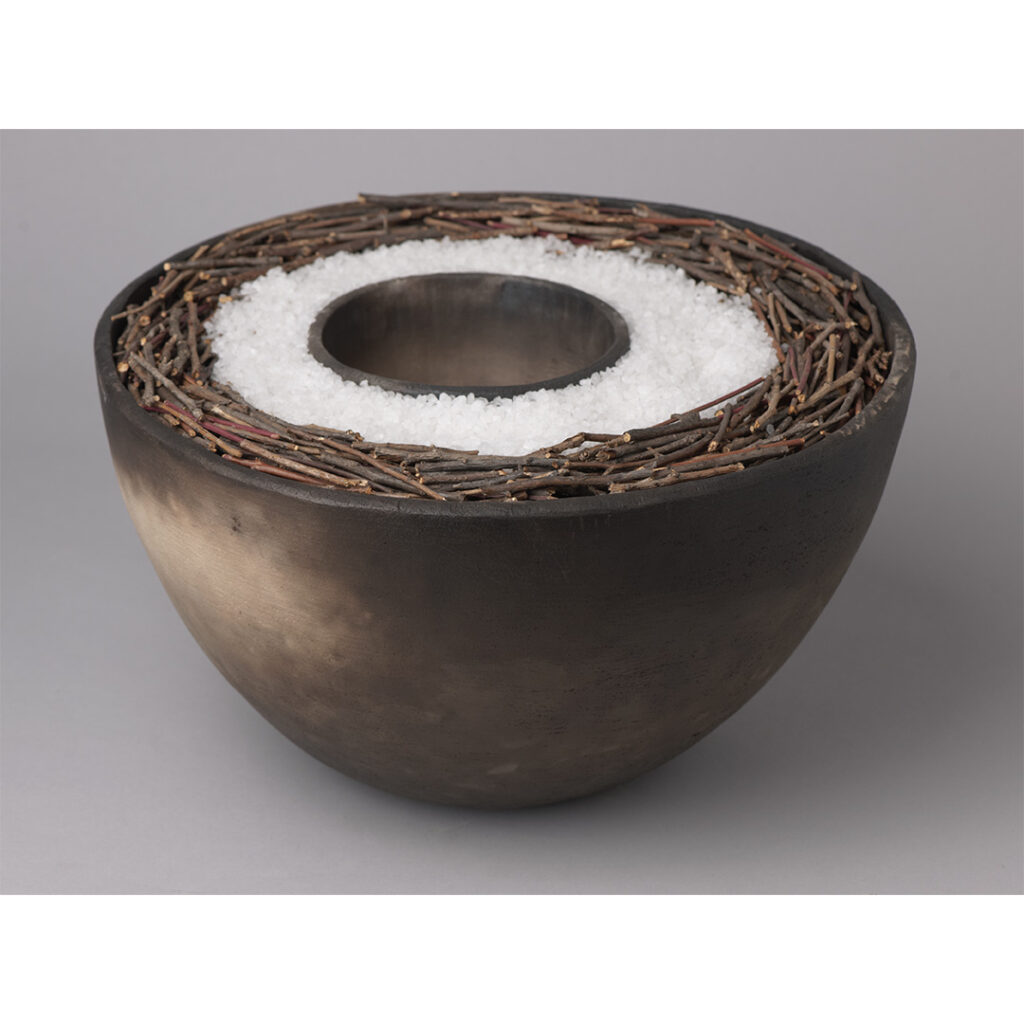
Deborah Butterfield’s (b. 1949) Hoku (Untitled.2411) presents a remarkable fusion of nature, materiality, and symbolism. At first glance, the lifesized sculpture of a horse seems to be made of real branches and twigs, evoking an organic, earthly presence. However, the piece is cast in bronze and features a meticulously applied patina that mimics the texture and appearance of wood. This transformation is the result of Butterfield’s intricate process: she first constructs the horse using found sticks from her ranch, photographs it from all angles, and then casts each stick in bronze. Finally, the pieces are reassembled, creating the final sculpture.
Show more about this piece
Deborah Butterfield, Hoku (Untitled.2411), 2001, bronze. Collection of the Kalamazoo Institute of Arts; Acquired through the generosity of an anonymous donor, 2011.51.
Heart of the Andes
Adopted by Kim Loftus
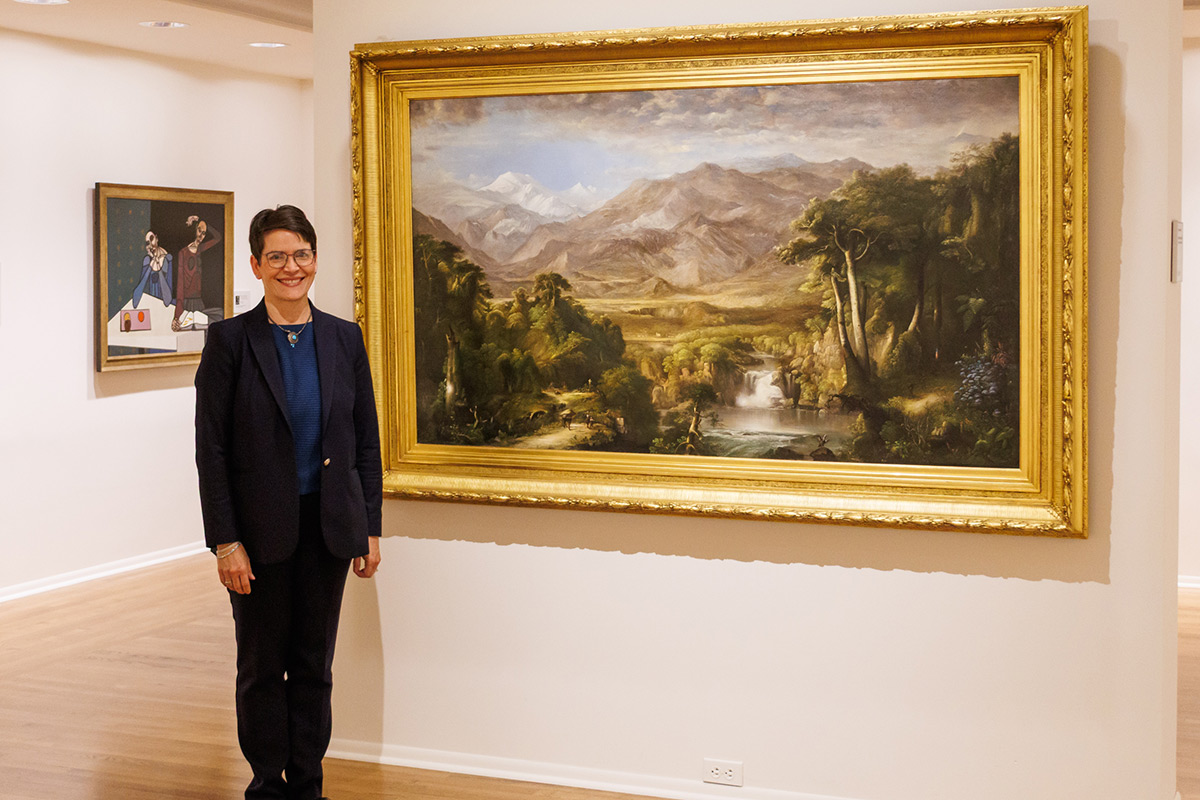
As the lone African American artist to develop a significant reputation within the European and American art worlds in the mid-nineteenth century, Robert Seldon Duncanson (1821–1872) is a singular figure. Duncanson painted Heart of the Andes in homage to Frederic Edwin Church’s painting of the same name, which he first viewed in 1860. Duncanson’s art concerns the degree to which his works were intended to comment on African American experiences. Heart of the Andes is a work that suggests a sense of optimism in the aftermath of conflict—a common sentiment in landscape paintings in the post–Civil War era. With the help of shared religious faith and a renewed sense of national purpose, Duncanson’s painting suggests the nation should again feel a sense of hope for the future.
Show more about this piece
Robert Seldon Duncanson, Heart of the Andes, 1871, oil on canvas. Collection of the Kalamazoo Institute of Arts; Gift of Elizabeth Upjohn Mason and Lowell B. Mason, Jr., 2002.9.
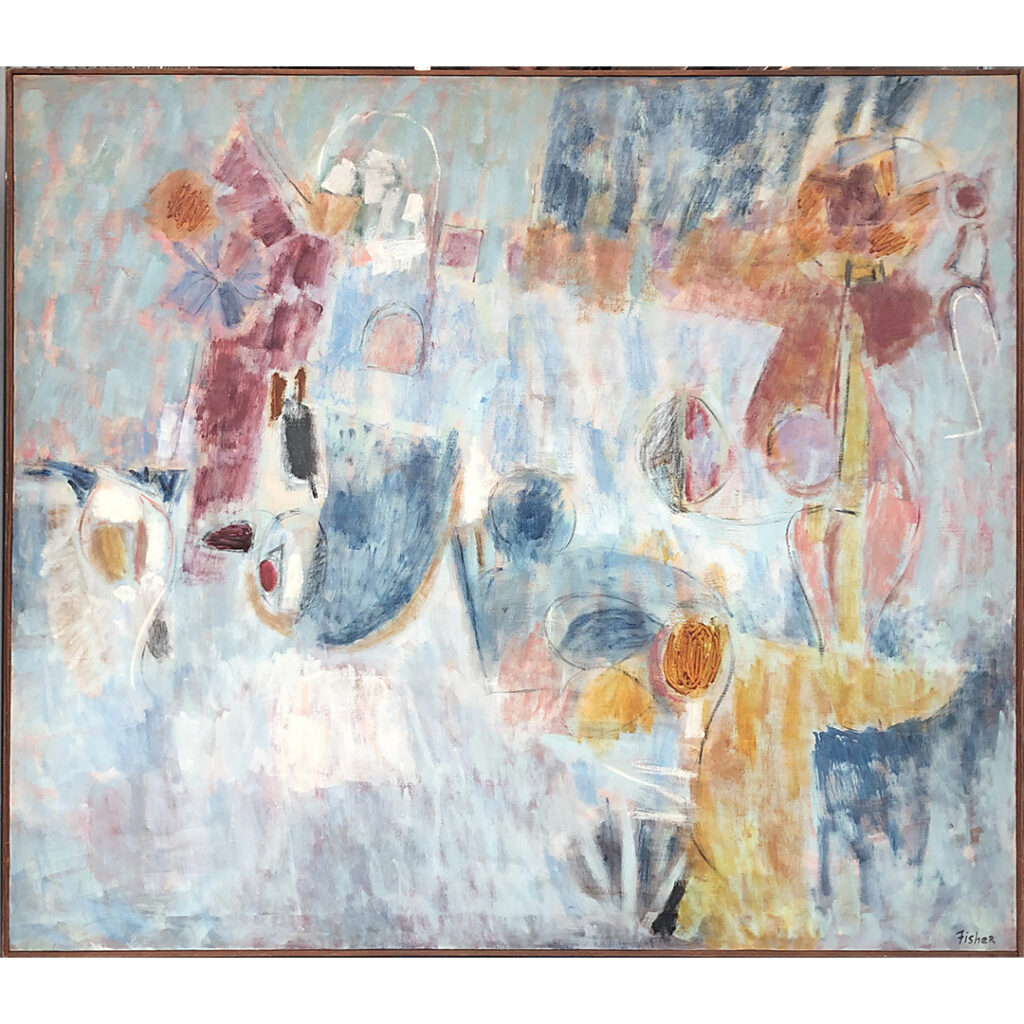
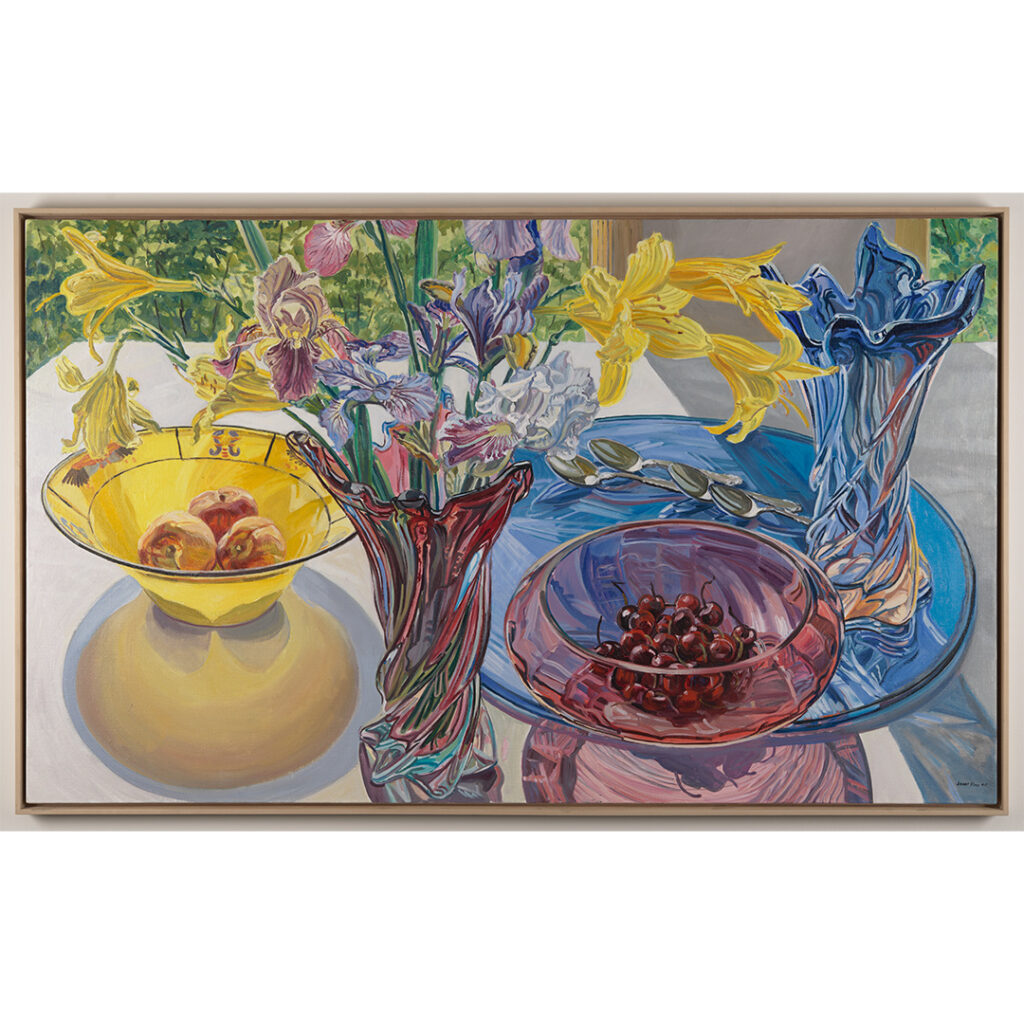
A Janet Fish still life is marked by the play of light that forms a relationship between the objects and unifies the work into a coherent whole. The complex interaction between objects is heightened by Fish’s thick application of paint and off-beat choices of color which blend in the viewer’s eye from a distance. The strong light of a summer day filters through a large window in the upper-left corner. The composition is carefully organized with three primary-colored bowls of red, yellow and blue playing against the strong verticals of the two matching vases. Janet Fish realized early that her real artistic interests lay in the relationship between objects in the real world. For her, still life painting is the most innovative genre available to painters, allowing for the greatest range of expression between realism and abstraction.
Show more about this piece
Janet Fish, June, 1999, oil on canvas. Collection of the Kalamazoo Institute of Arts; Gift of the Garside Family in memory of James W. and Thelma Garside, 2000.17.
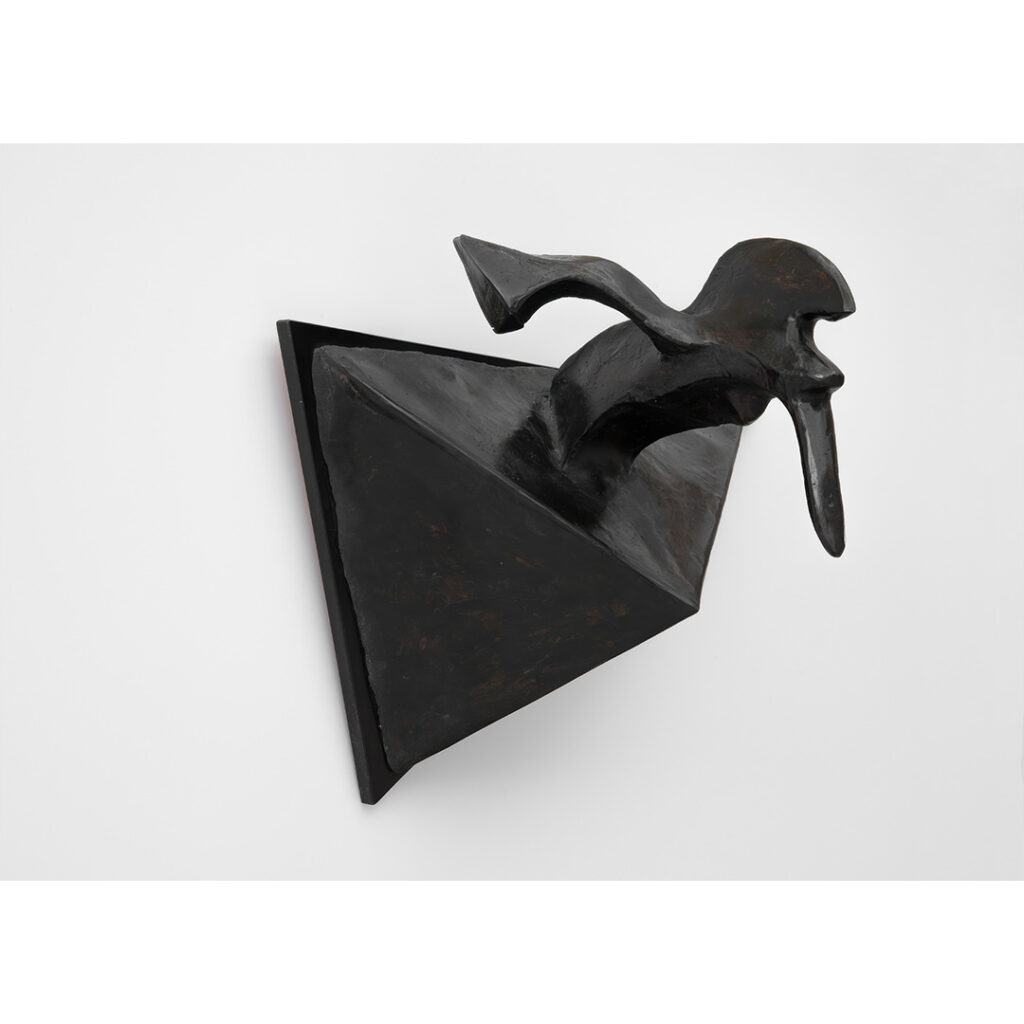
Richard Hunt’s (1935–2023) Wall Piece, which rises from a triangular base, exemplifies his ability to merge the organic with the abstract. The sculpture’s form, seemingly in flight, captures the essence of movement and transformation. This interplay between grounded and airborne elements reflects Hunt’s interest in the natural world and its inherent dynamism. His reflections on nature often manifest in his work as fluid, evolving shapes that suggest growth, evolution, and the unknown.
Show more about this piece
Richard Hunt, Wall Piece, 1969, cast bronze, patina, black. Collection of the Kalamazoo Institute of Arts; Gift of the artist, 1969/70.63.
Stuart Avenue
Adopted by Lauren Tripp in memory of Ethel Groos
Marilyn Johnson (1935–2021) was a vital figure in Kalamazoo’s artistic community, known for her detailed and vibrant depictions of local architecture. A former freelance fashion illustrator, Johnson became deeply engaged with Southwest Michigan’s arts scene, exhibiting widely and contributing to the cultural life of the region. She taught at Portage Community Schools, served on the Arts Council of Greater Kalamazoo, and was a member of the Board of Directors for the Kalamazoo Institute of Arts (KIA), where she also studied and taught at the Kirk Newman Art School. Johnson’s involvement in the KIA helped shape the arts education landscape in Kalamazoo. Stuart Avenue is a quintessential example of Johnson’s distinctive approach to capturing architectural beauty. The painting focuses on the upper level of brightly painted Victorian homes in Kalamazoo’s Stuart neighborhood and is marked by vibrant color and intricate detail.
Show more about this piece
Marilyn Johnson, Stuart Avenue, 2002, oil on canvas. Collection of the Kalamazoo Institute of Arts; Elisabeth Claire Lahti Fund, 2017.4.
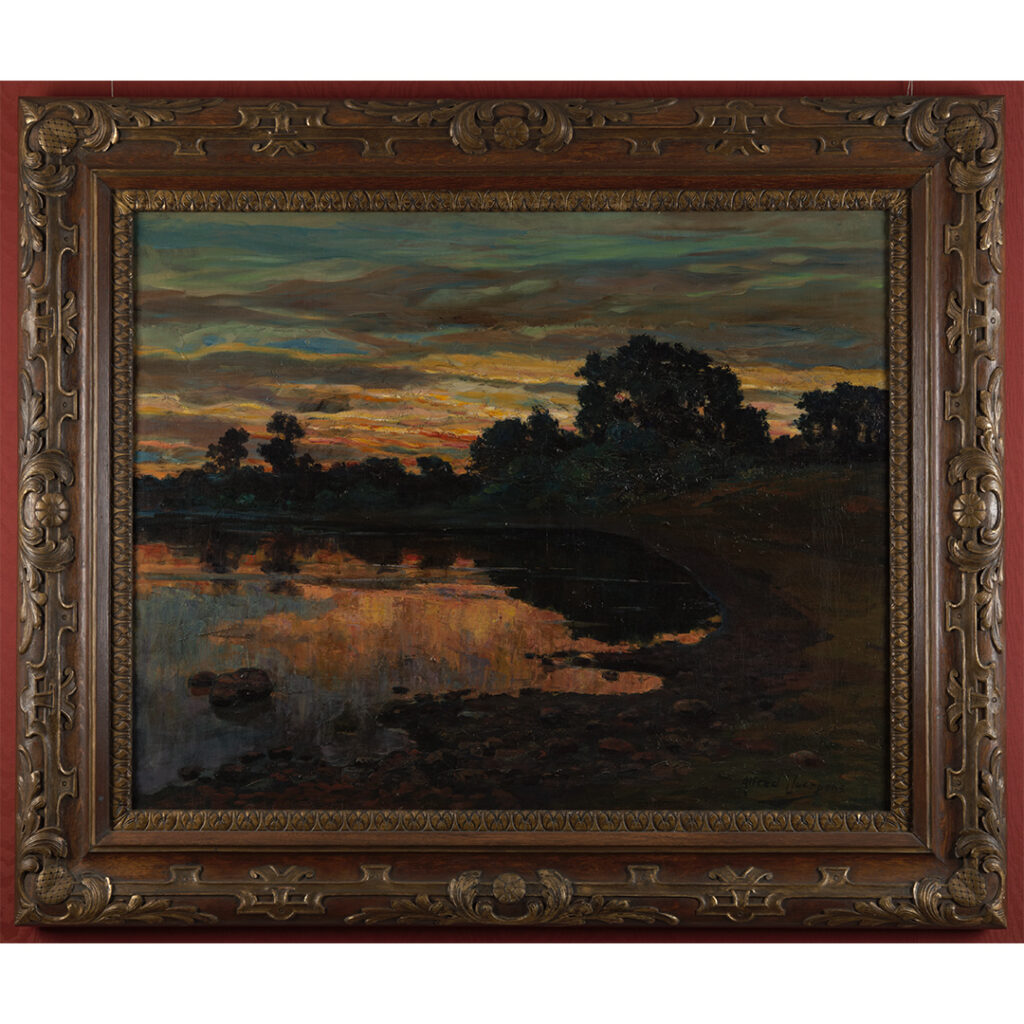
Although dark and serene, this scene is energized by vibrant colors. The atmospheric glow of the setting sun is a common subject among painters who, like Alfred Juergens (1866–1934), pursued the so-called Tonalist style in the late nineteenth century. Tonalist artists painted hazy or dark landscapes that evoked a melancholy mood or conveyed a spiritual experience of nature. The glowing color of dawn or dusk illuminating an uninhabited landscape can give Tonalist paintings a calm and eerie quality. Later in his career Juergens abandoned Tonalism in favor of the bright colors and cheery subjects common among early-twentieth-century American Impressionists.
Show more about this piece
Alfred Juergens, Twilight, ca. 1890-92, oil on canvas. Collection of the Kalamazoo Institute of Arts; Gift of the Dryer Family Foundation and Permanent Collection Fund, 1995/6.12.
Hughie Lee-Smith (1915–1999) began his art studies at the Cleveland Art School at age ten, realizing early that he wanted to be an artist. Driven by the belief that art could advance social justice and racial equality, he used works like The Spectators to convey his emotions about social and cultural inequalities as they pertained to the entirety of humanity. In The Spectators, Lee-Smith poignantly renders four figures on a concrete platform, gazing out over a gray, desolate, seemingly tranquil body of water. Four male youths—three white and one Black—stand together. Despite their being clustered in a group, a visible crack in the concrete spreads upward between the white youths and the Black youth, emphasizing their alienation and visually representing the racial divisions in the United States. His work remains deeply relevant today, just as it was during his lifetime.
Show more about this piece
Hughie Lee-Smith, The Spectators, ca. 1957, oil on Masonite. Collection of the Kalamazoo Institute of Arts; Gift of Ronda Stryker, William Johnston, and Michael, Megan, and Annie Johnston, 2002.7.
Edmonia Lewis (1844–1907) was one of the first African American and Native American sculptors to achieve international recognition, defying the norms of her time. A self-taught artist of Ojibwe and African American ancestry, Lewis overcame significant racial and gender-based obstacles to establish her artistic practice in the male-dominated world of sculpture. In 1865 she moved to Rome, joining a group of American women sculptors who sought greater artistic freedom in the European capital. There, Lewis honed her craft, mastering the delicate art of marble carving. The Marriage of Hiawatha is part of Lewis’s celebrated series of sculptures inspired by Henry Wadsworth Longfellow’s 1855 epic The Song of Hiawatha, which romanticized Native American culture through the lens of the “noble savage” stereotype.
Show more about this piece
Edmonia Lewis, The Marriage of Hiawatha, 1872, marble. Collection of the Kalamazoo Institute of Arts; Acquired through the generosity of an anonymous donor, 2010.1.
Lady Lotus
Adopted by Christine Walker
Hung Liu (1948–2021) attended the Central Academy of Art in Beijing, where she was trained in the rigid Chinese Socialist Realist style. After waiting seven years for the Chinese government to approve her passport, Liu pursued her master’s degree in painting at the University of California San Diego beginning in 1984. She is now widely known for her paintings of Chinese workers and women assigned to sexual servitude under the Communist regime. Her work is often executed in a style that shows her interest in and use of historical photographs. Her works often not only exploit the extreme detail that photographs can capture, but also make use of their capacity to foreground the humanity of the people they represent.
Show more about this piece
Hung Liu, Lady Lotus, 2016, mixed media on panel. Collection of the Kalamazoo Institute of Arts; Joy Light East Asian Art Acquisition and Exhibition Fund, 2017.38.
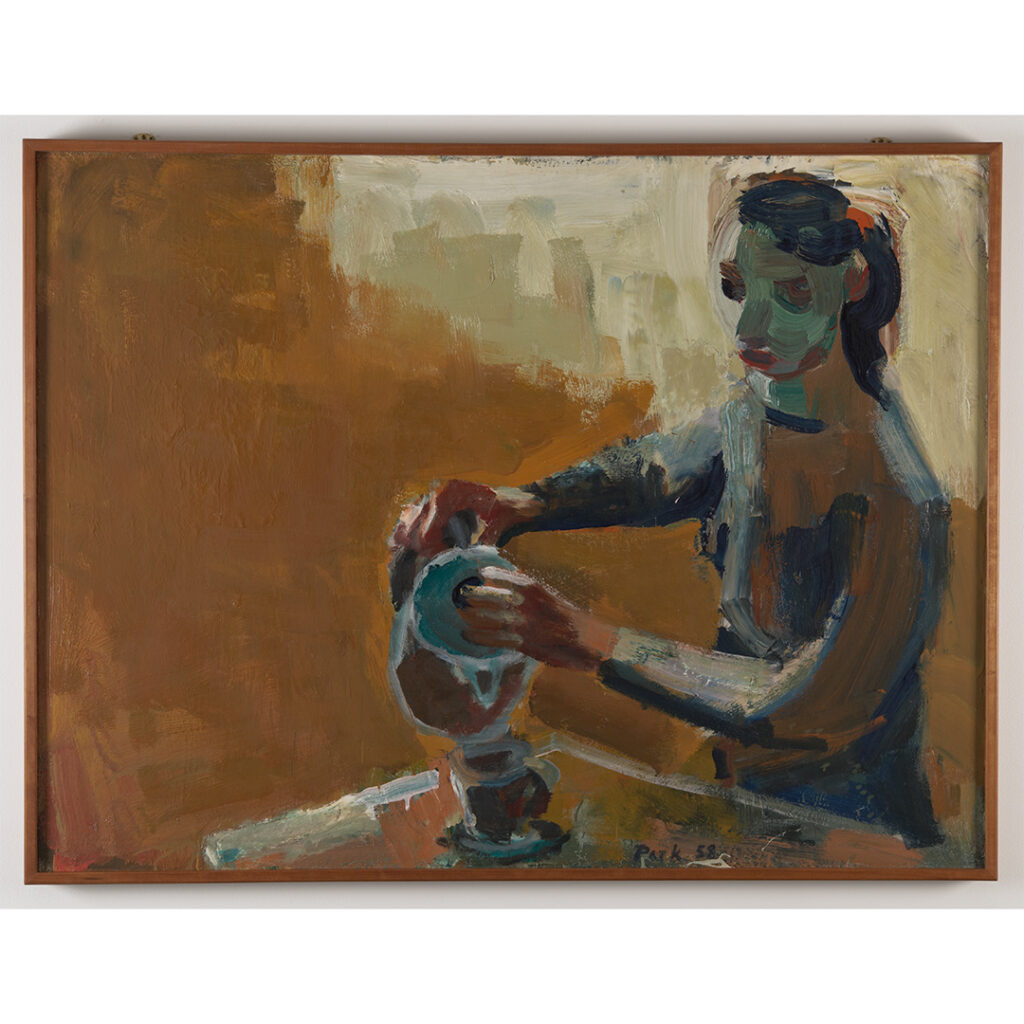
Considered one of David Park’s (1911– 1960) most groundbreaking interiors, Woman with Coffee Pot illuminates the artist’s ability to create tension between recognizable subject matter and the expressive possibilities of paint. In Woman with Coffee Pot, a few bold brushstrokes give form to a woman’s arms and hands, capturing the simple, everyday act of pouring coffee. Park’s use of broad, gestural strokes and a muted color palette strips the scene of extraneous detail, focusing instead on the monumental nature of the gesture. The resulting composition elevates this mundane act to a moment of profound significance.
Show more about this piece
David Park, Woman with Coffee Pot, 1958, oil on canvas. Collection of the Kalamazoo Institute of Arts; Director’s Fund, 1968/9.88.
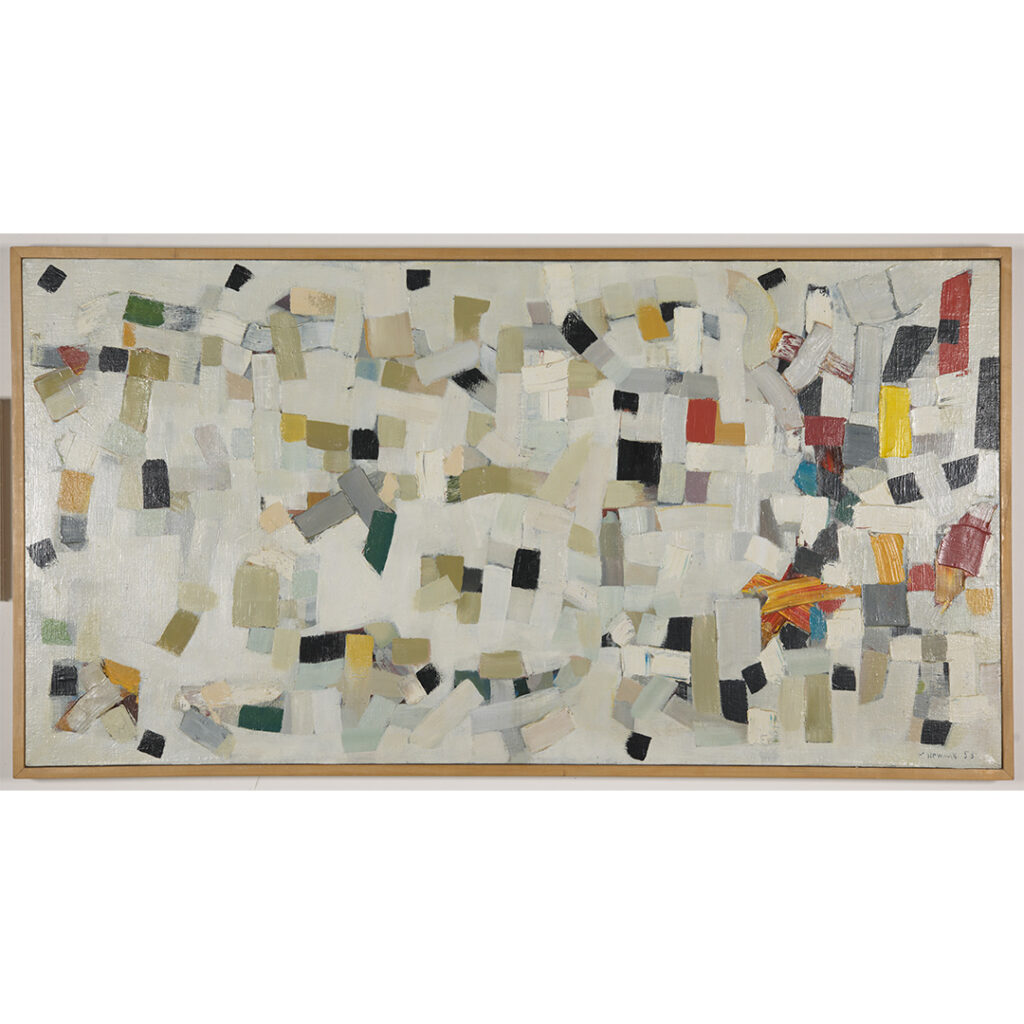
Richard Pousette-Dart (1916–1992) was a pioneering figure in the Abstract Expressionist movement, known for his innovative use of paint and emphasis on texture, luminosity, and the emotional resonance of color. By the Sea is a striking example of Pousette-Dart’s singular style, characterized by a sense of depth, subtlety, and movement. At first glance, the painting seems deceptively simple, with a fluid arrangement of blue hues suggesting a serene seascape. However, closer inspection reveals the intricate texture of the painting’s surface—dots of color, applied directly from the tube, that nearly create a sculptural effect.
Show more about this piece
Richard Pousette-Dart, By the Sea, 1958, oil on canvas. Collection of the Kalamazoo Institute of Arts; Gift of Pfizer Inc, 2008.19.
Hiram Powers (1805–1873) was a pioneering American sculptor who achieved international acclaim for his Neoclassical marble portraiture. His George Washington bust is one of his most iconic works, exemplifying his mastery in portraiture and his understanding of the role of sculpture in shaping national identity. Modeled in plaster in the late 1830s and later carved in marble, Powers’s George Washington presents the first president of the United States in a moment of stoic repose. The bust captures Washington’s likeness with striking accuracy, while also idealizing his features to reflect the virtues of leadership and the moral gravitas that defined his presidency.
Show more about this piece
Hiram Powers, George Washington, 1838-1844, carving after 1844, marble. Collection of the Kalamazoo Institute of Arts; Acquired through the generosity of an anonymous donor, 2012.52.
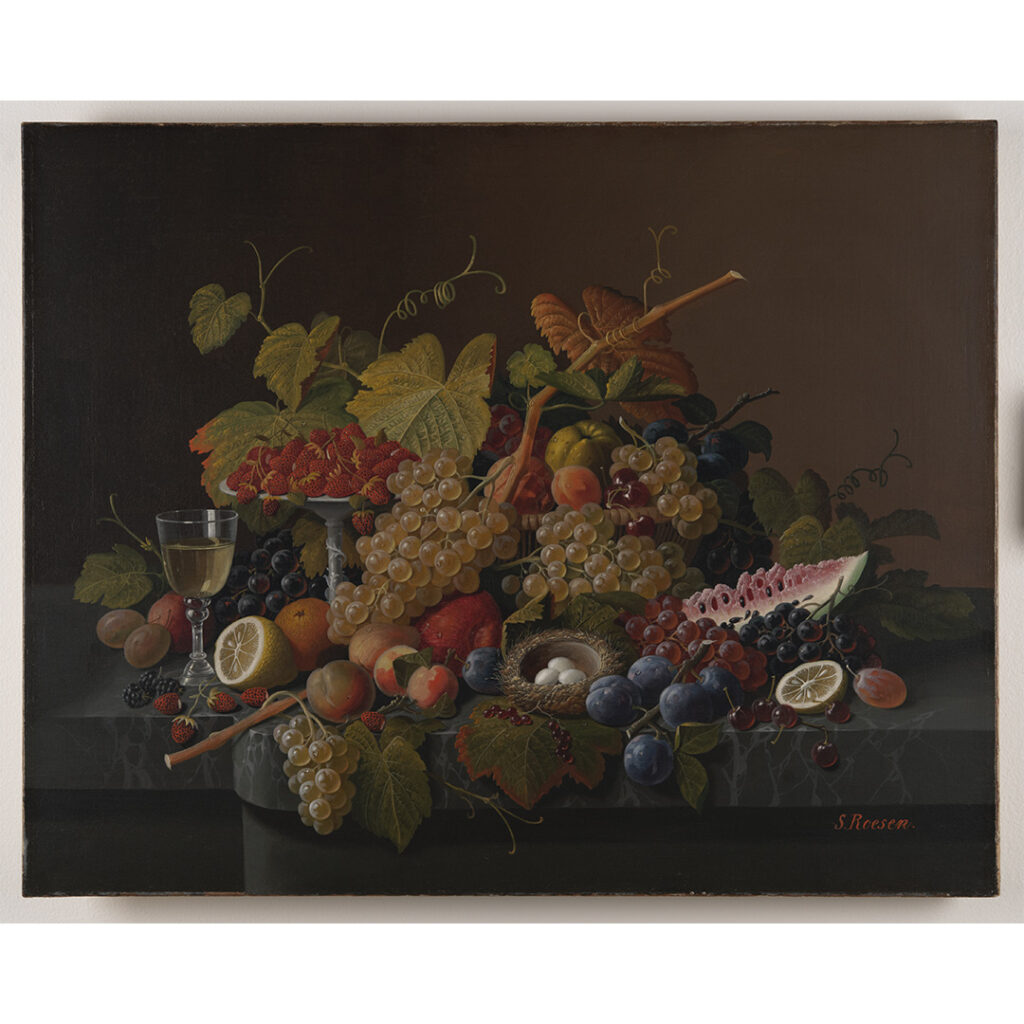
Severin Roesen (1815–1872, Germany) was a prolific painter celebrated for his overflowing fruit-and-flower-filled still lifes. These meticulous paintings helped him establish a reputation as one of America’s most important and skilled still life painters of the mid-nineteenth century. He modeled his work after seventeenth- and early eighteenth-century Dutch painting, in which fruit and flowers were also artificially arranged and painstaking attention to the careful depiction of fine details was celebrated.
Show more about this piece
Severin Roesen, Still Life with Fruit and Bird’s Nest, n.d., oil on canvas. Collection of the Kalamazoo Institute of Arts; Gift of Findlay Gallery by exchange, 2013.21.
The Square Root of Paradise
Adopted by Ina Whitney
Miriam Schapiro (1923–2015, Canada) coined the word “femmage” in the 1970s, using it to describe an activity practiced by women using traditional women’s techniques to achieve their art—sewing, piecing, hooking, cutting, appliquéing, and the like. Schapiro was a pioneering feminist artist, teacher, and writer who fought against the prevailing notion that women couldn’t produce fine art. She also challenged the idea that traditional and decorative craft couldn’t be “high art.” The Square Root of Paradise, which was commissioned expressly for the KIA and was the first of a new series of paintings by the artist, is representative of the Pattern and Decoration art movement.
Show more about this piece
Miriam Schapiro, The Square Root of Paradise, 1980, acrylic paint and fabric on canvas. Collection of the Kalamazoo Institute of Arts; Purchased with funds from the NEA and matching funds given by Friends of Art in memory of Diana Gilmore, 1980/1.1.
The Tiffany Studios Woodbine Table Lamp exemplifies the intricate craftsmanship and innovative design that made Tiffany Studios a leader in the decorative arts during the late nineteenth and early twentieth centuries. The Woodbine pattern, like many of Tiffany’s designs, draws inspiration from nature, featuring a rich tapestry of intertwining leaves and vines, often rendered in vibrant, colorful glass.
Show more about this piece
Tiffany Studios, Woodbine Table Lamp, ca.1910, leaded glass and bronze. Collection of the Kalamazoo Institute of Arts; Tiffany & Co. Fund in honor of John Loring, 2009.118.
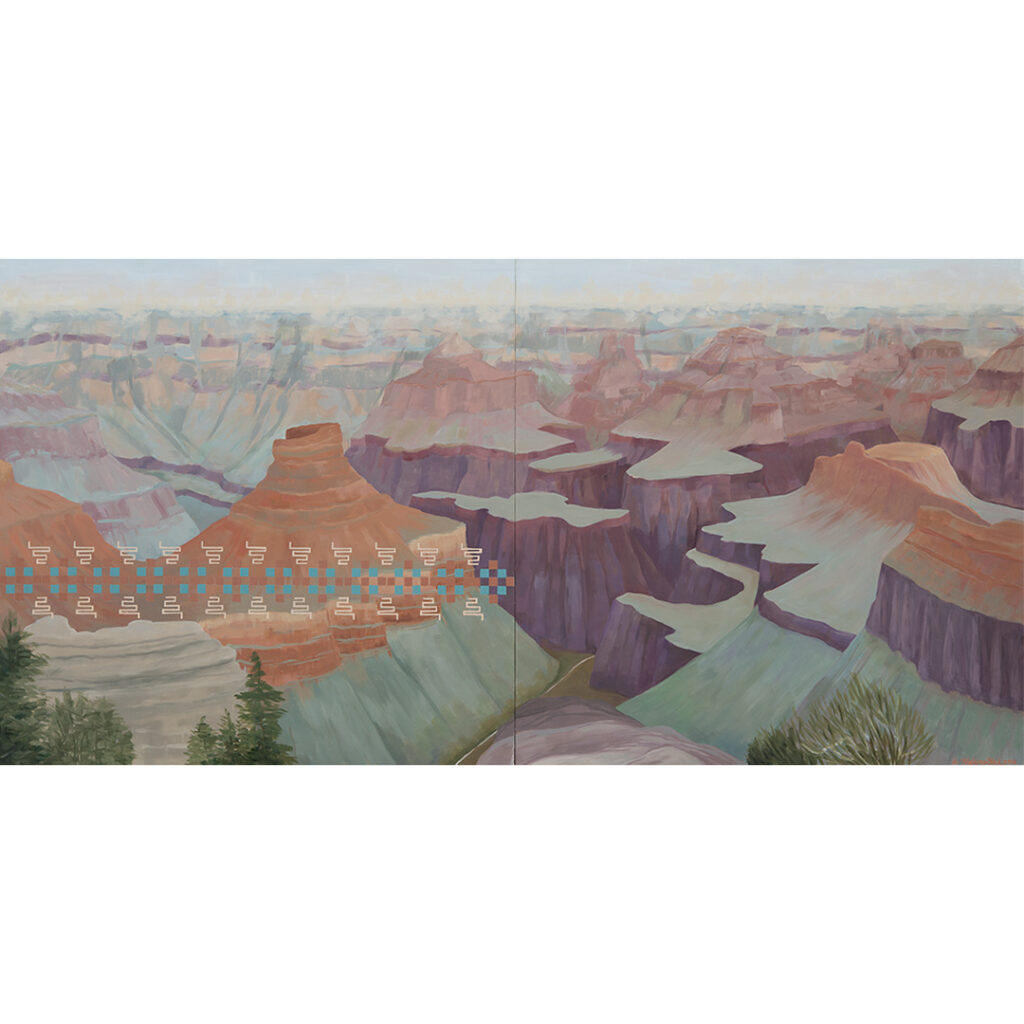
Kay WalkingStick’s (b. 1935, Cherokee) use of a brush to represent three-dimensional landscapes—versus her use of a stencil to make flat, Indigenous patterns—depicts a duality: an interrelationship between the Western European painting tradition in which the artist was trained, and the flat abstraction of her own Indigenous inheritance. Born in Syracuse, New York, to a Cherokee father and a Scotch-Irish mother, the artist has for nearly 40 years been examining the concept of duality concerning her identity in the world.
Show more about this piece
Kay WalkingStick, North Rim Clouds, 2016, Oil on wood panel. Collection of the Kalamazoo Institute of Arts; Elisabeth Claire Lahti Fund, 2018.3.A-B.
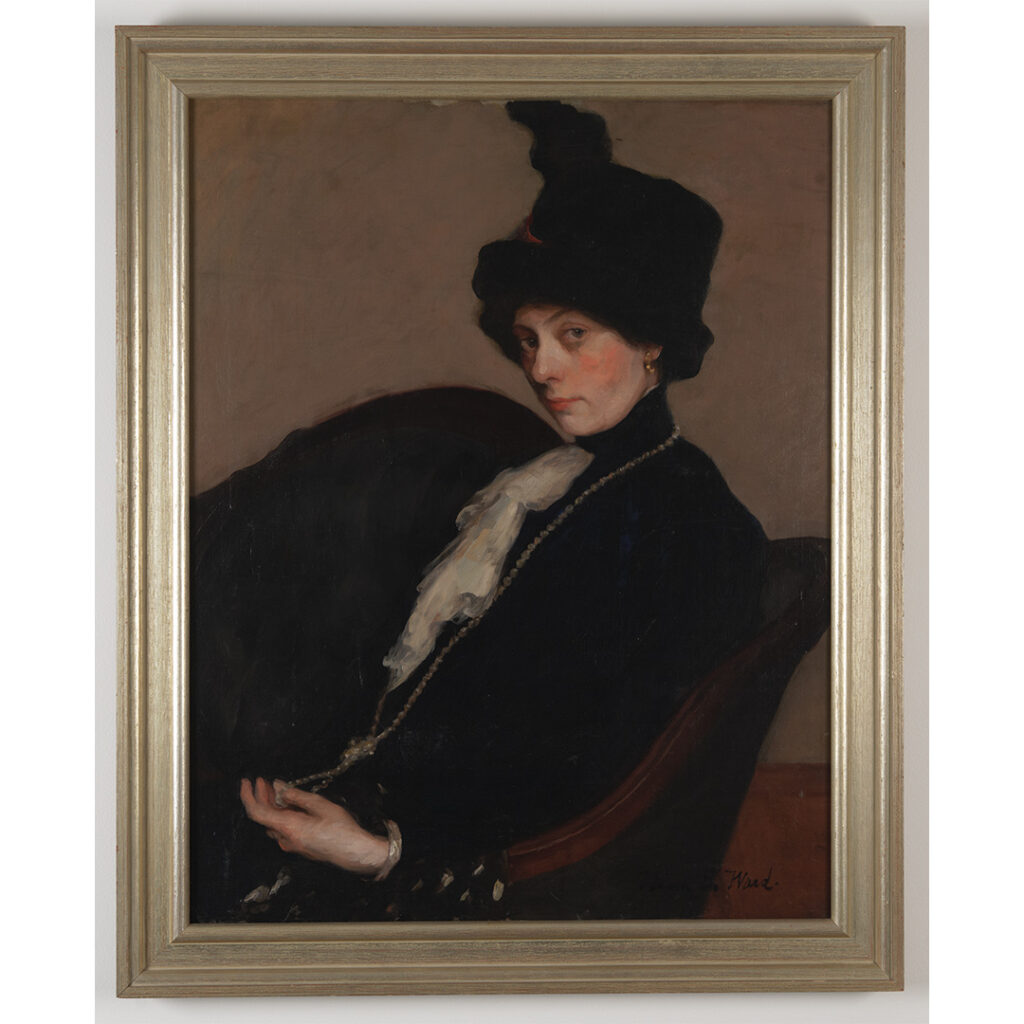
Nina Belle Ward (1885–1944), a promising talent in early twentieth-century American portraiture, captured the subtleties of human emotion with grace and skill. Portrait of a Lady in Black exemplifies her mastery in both technical execution and psychological depth. The painting portrays a young woman dressed in rich, elegant at- tire—her black hat, white lace blouse, and string of pearls all add to her air of refinement. Yet it is the subject’s enigmatic expression that defines the painting. With a slight glance directed askance, her face follows the viewer, creating an uncanny sense of intimacy and mystery.
Show more about this piece
Nina Belle Ward, Portrait of a Lady in Black, 1912, oil on canvas. Collection of the Kalamazoo Institute of Arts; Gift of A. Pitzer Ward, 1960/1.11.
Descriptions are excerpted from the KIA’s new publication, 101 Legendary Selections from the Kalamazoo Institute of Arts, available for purchase in the Gallery Shop.
We use cookies to ensure that we give you the best experience on our website. If you continue to use this site we will assume that you are happy with it.